Cart (0)
← Back to Events

OSKAR ZIĘTA. PROCESS From the Plopp stool to the Ultre™ vehicle

Institute of Industrial Design, Warsaw

Świętojerska 5/7, 00-236 Warsaw

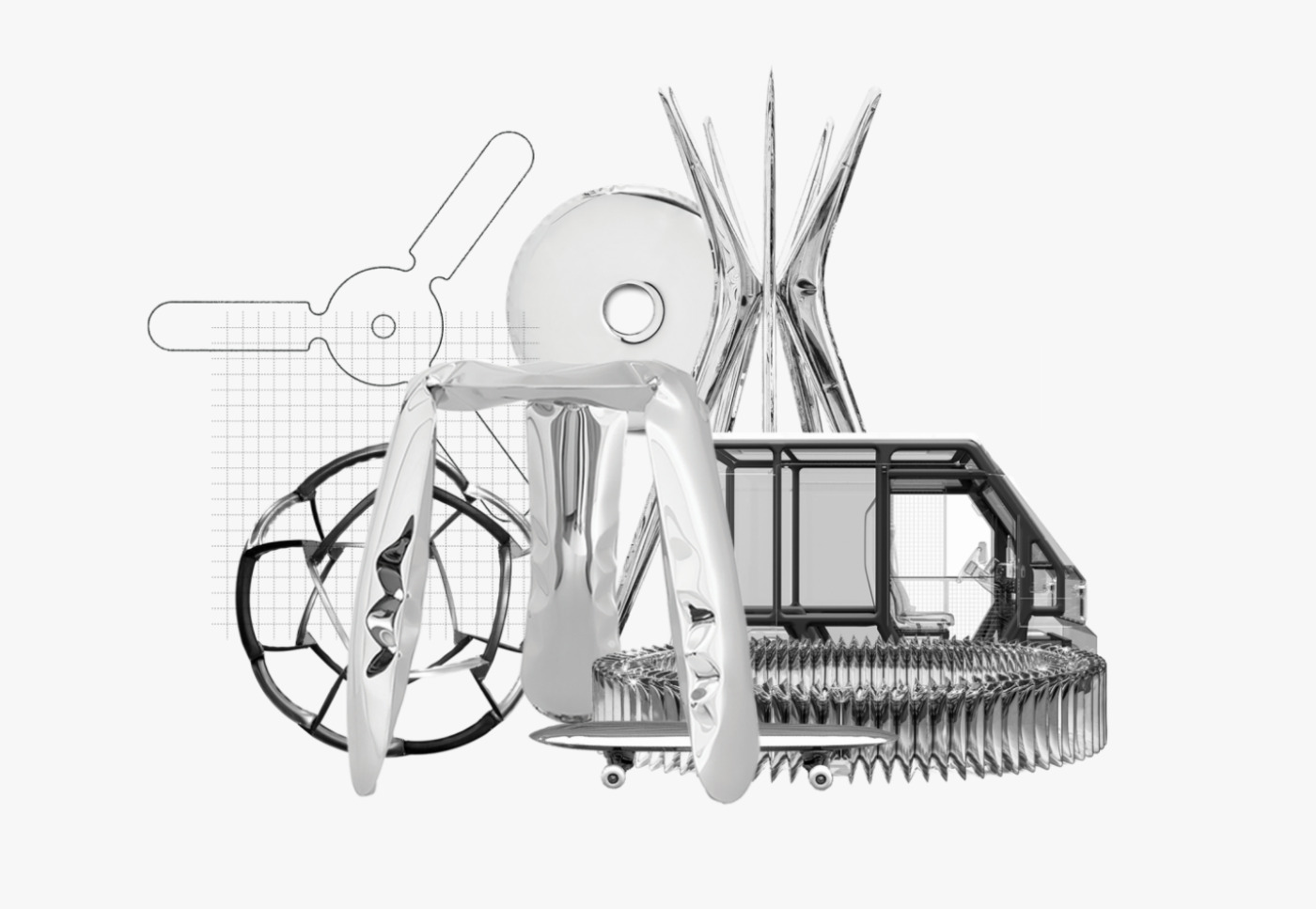
“Oskar Zięta. Process” is a cross-disciplinary exhibition spanning more than two decades of Oskar Zięta’s practice at the intersection of design, art, engineering and technology. From his earliest experiments with thin-walled metal and the development of his proprietary FiDU technology, through the iconic Plopp stool and the ultralight Ultraleggera, large-scale works such as Nawa and Whispers, and Zieta Lighting, to his latest research into mobility and the Ultre™ vehicle as an urban tool.
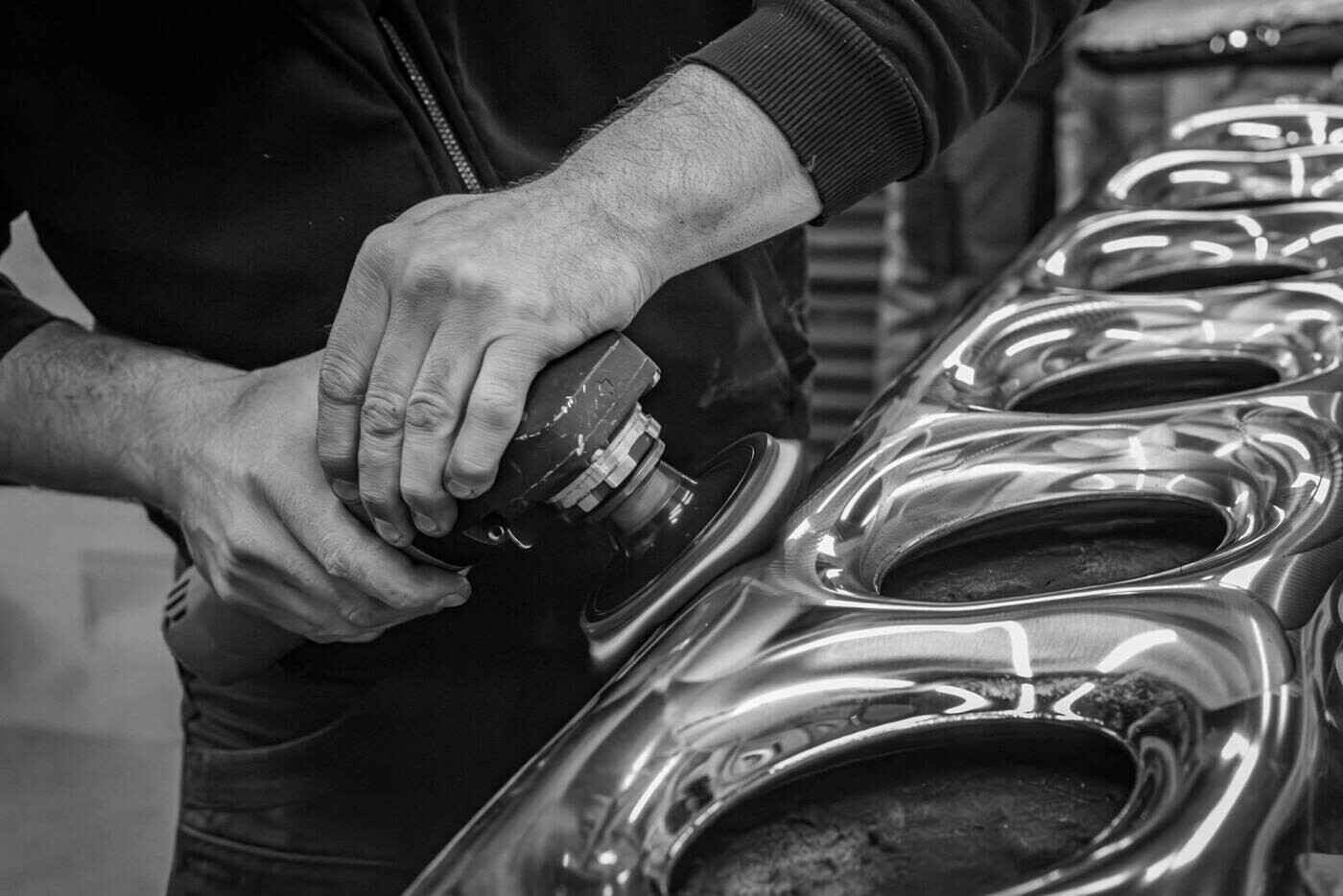
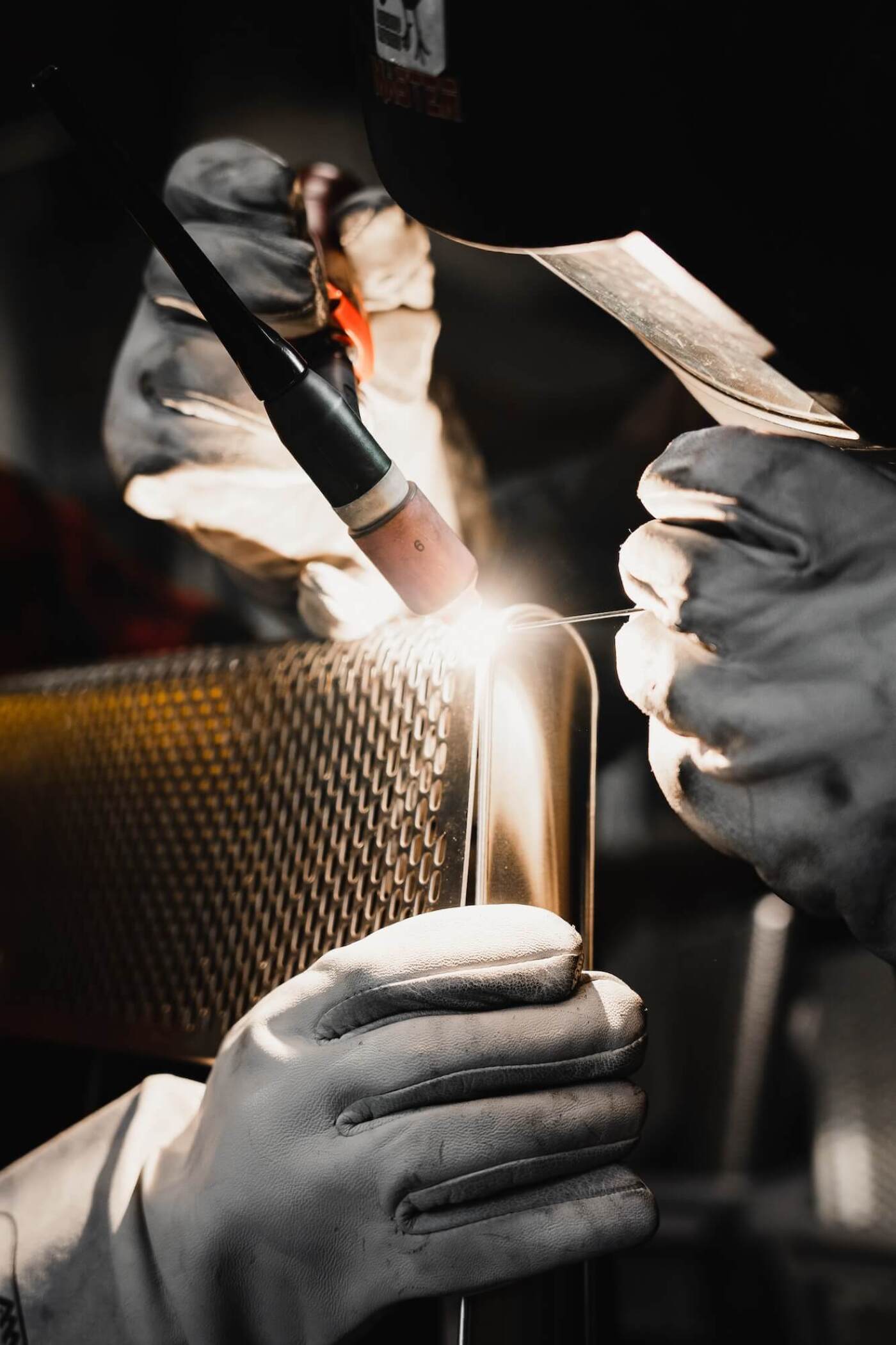
Zieta studio production process

photo: Kacper Miodek

FiDU – technology and medium
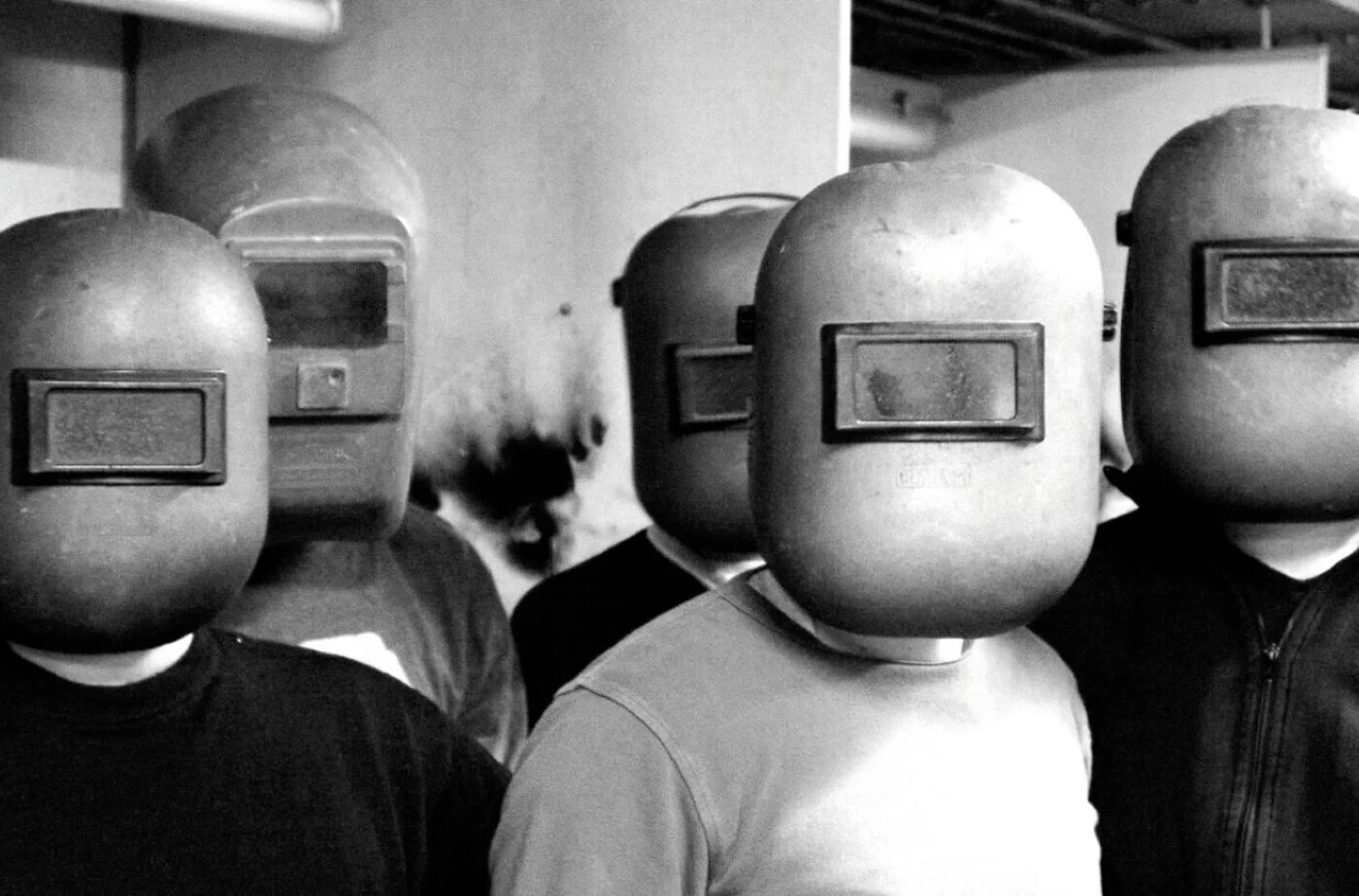
The exhibition is not a conventional retrospective. Rather than following a linear chronology, it traces successive stages of one continuously evolving research process. A process in which material deformation becomes a tool for design, technology becomes an artistic medium, and sculpture becomes a laboratory for new structural solutions.

The spine of the exhibition is a research and development table. Around it, experimentation and precision, chaos and control, craftsmanship and robotics converge. The table becomes a space for work and a starting point for the story of FiDU — a technology that allows flat metal membranes to be transformed into spatial, stable structures through internal pressure.

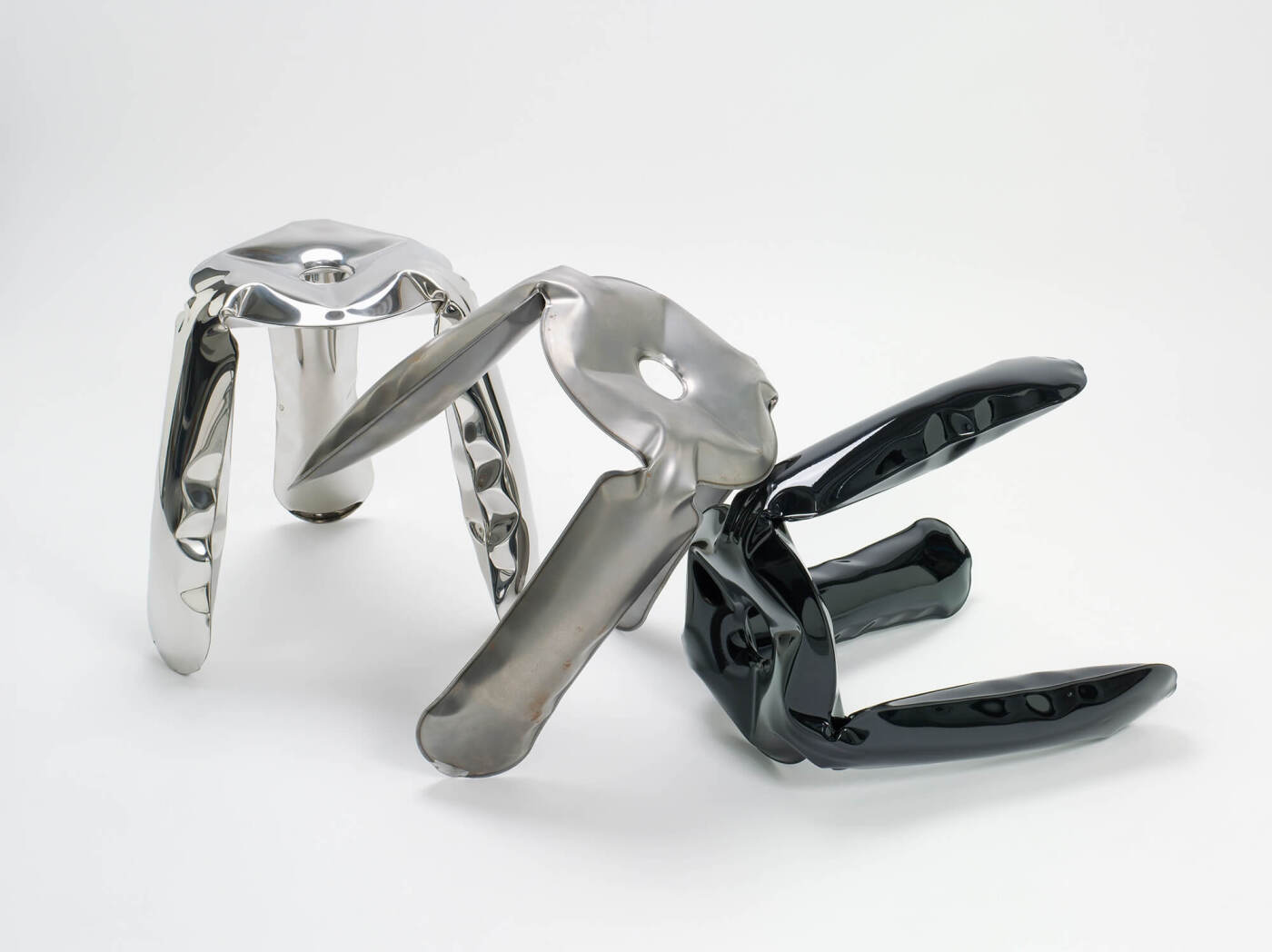
A special place is given to Plopp — the Polish Folk Object Pumped with Air. One of Zięta’s most recognisable objects is presented not simply as a finished stool, but as the result of a long process of experimentation. Prototypes, models and successive stages of deformation reveal the moment when the apparent “error” of the material became the beginning of a new design language. The exhibition therefore shows not only what was created, but above all how it came into being.
oskar zieta's whisper objects

Whispers photo: Alka Murat

Ultralightness and monomateriality

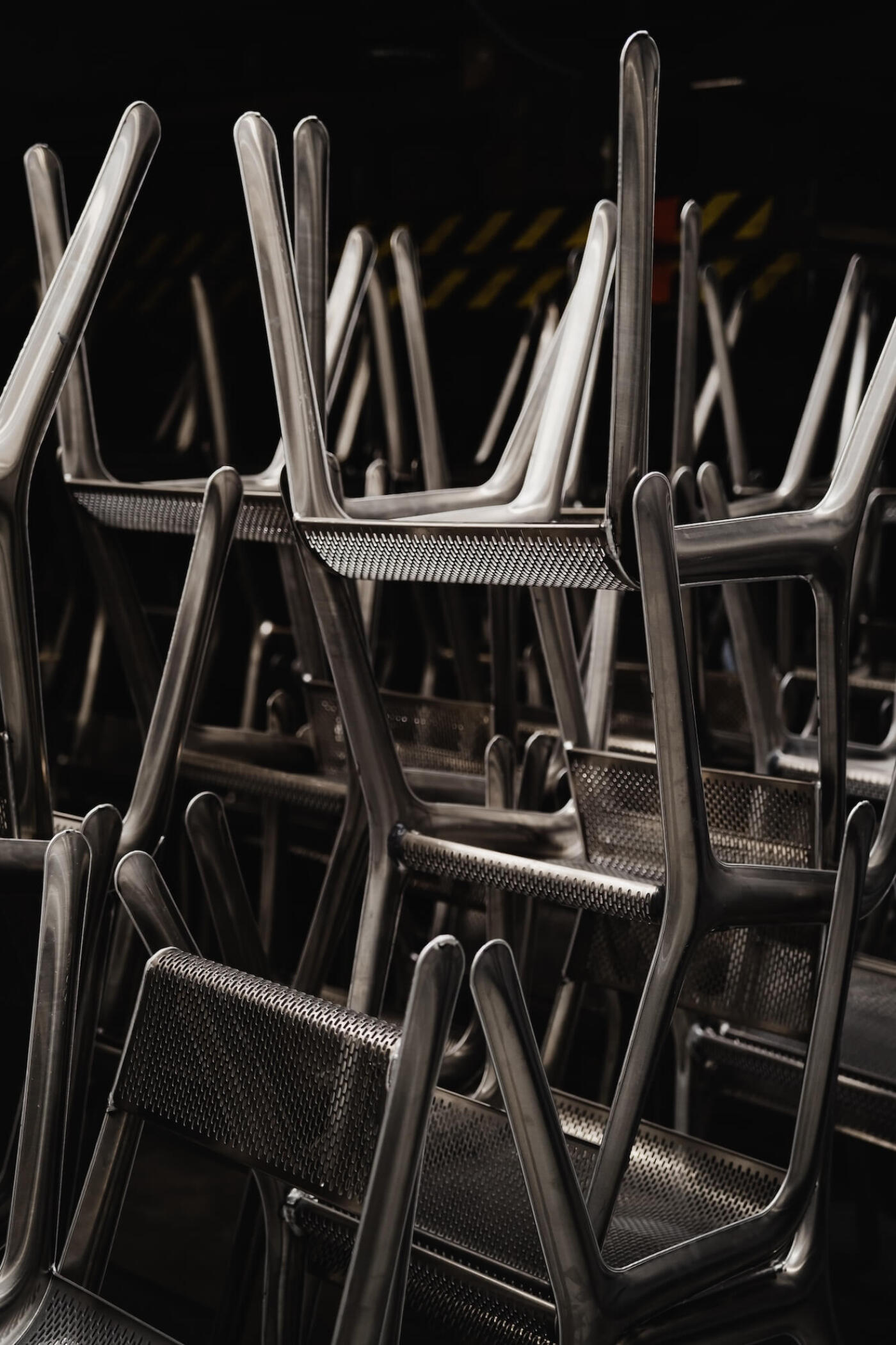
One of the foundations of Zięta’s practice is the continuous search for an optimal relationship between the amount of material, its mass and its strength. Ultraleggera — an aluminium chair weighing just 1.66 kg and capable of carrying a load of 1.2 tonnes — is one of the clearest manifestations of this philosophy. It is design through subtraction: reducing material, mass and structure while retaining function and strength.

In FiDU, Zięta works with the properties of the material and allows it to co-create the final geometry. Under pressure, a flat membrane changes its form, gaining spatiality and stability. Deformation is not an error, but part of the process — a controlled loss of control.

From object to architecture
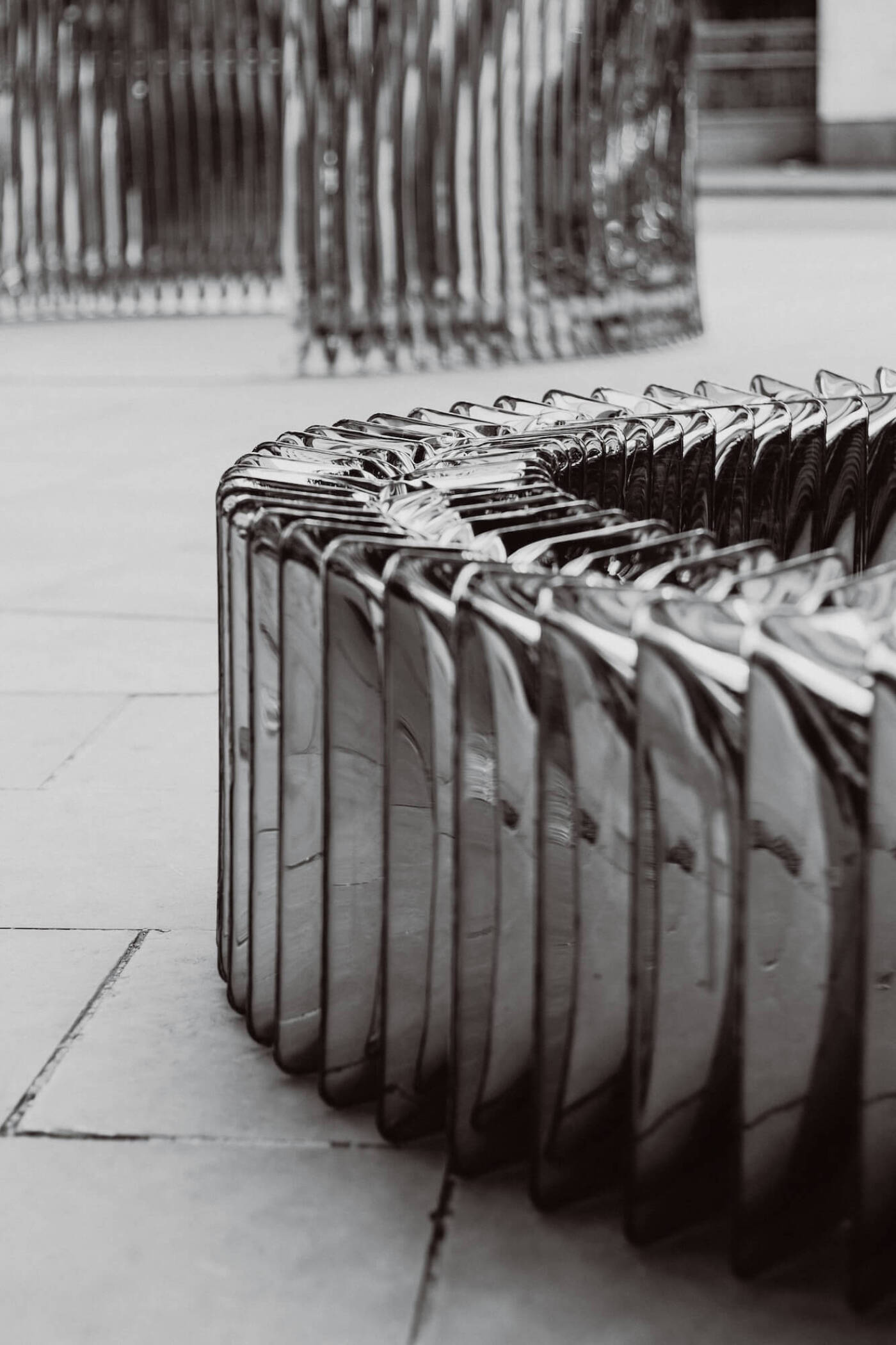
Zięta’s process can also be traced through changes of scale. The exhibition features steel profiles that embody the essence of the Blow & Roll installation, presented at the Victoria and Albert Museum in London in 2010. Its contemporary counterpart is Whispers — an installation that opened the London Festival of Architecture in the Fleet Street Quarter in 2025.

Whispers demonstrates how solutions developed within the FiDU laboratory can move between scales, places and disciplines. From a single element to architecture, from material experimentation to a functional object, from structure to an experience of space.
zieta studio ultraleggera chairs stacked together

Ultraleggera Chair photo: Kacper Miodek
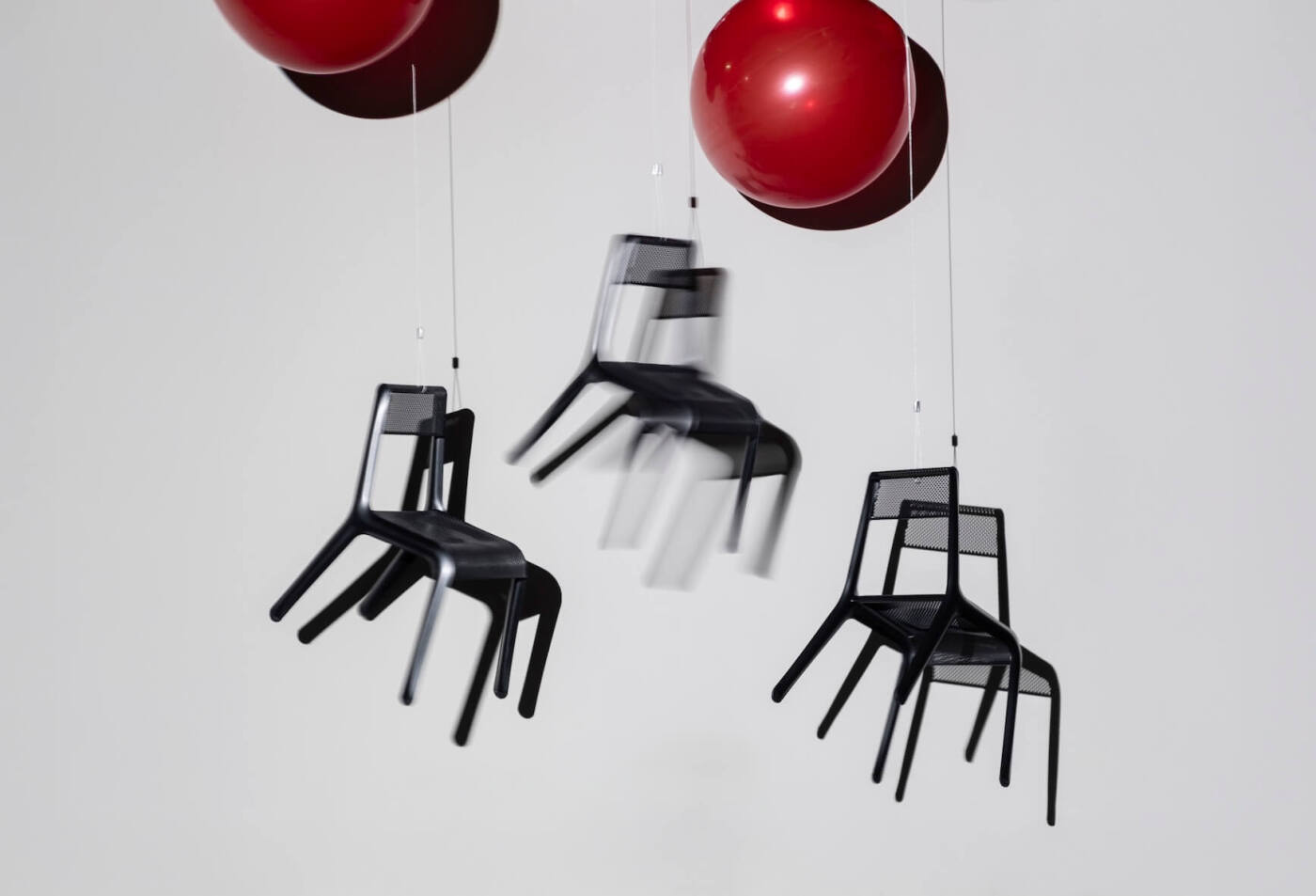
zieta studio ultraleggera chairs floating

Ultraleggera Chair photo: Weronika Trojanowska
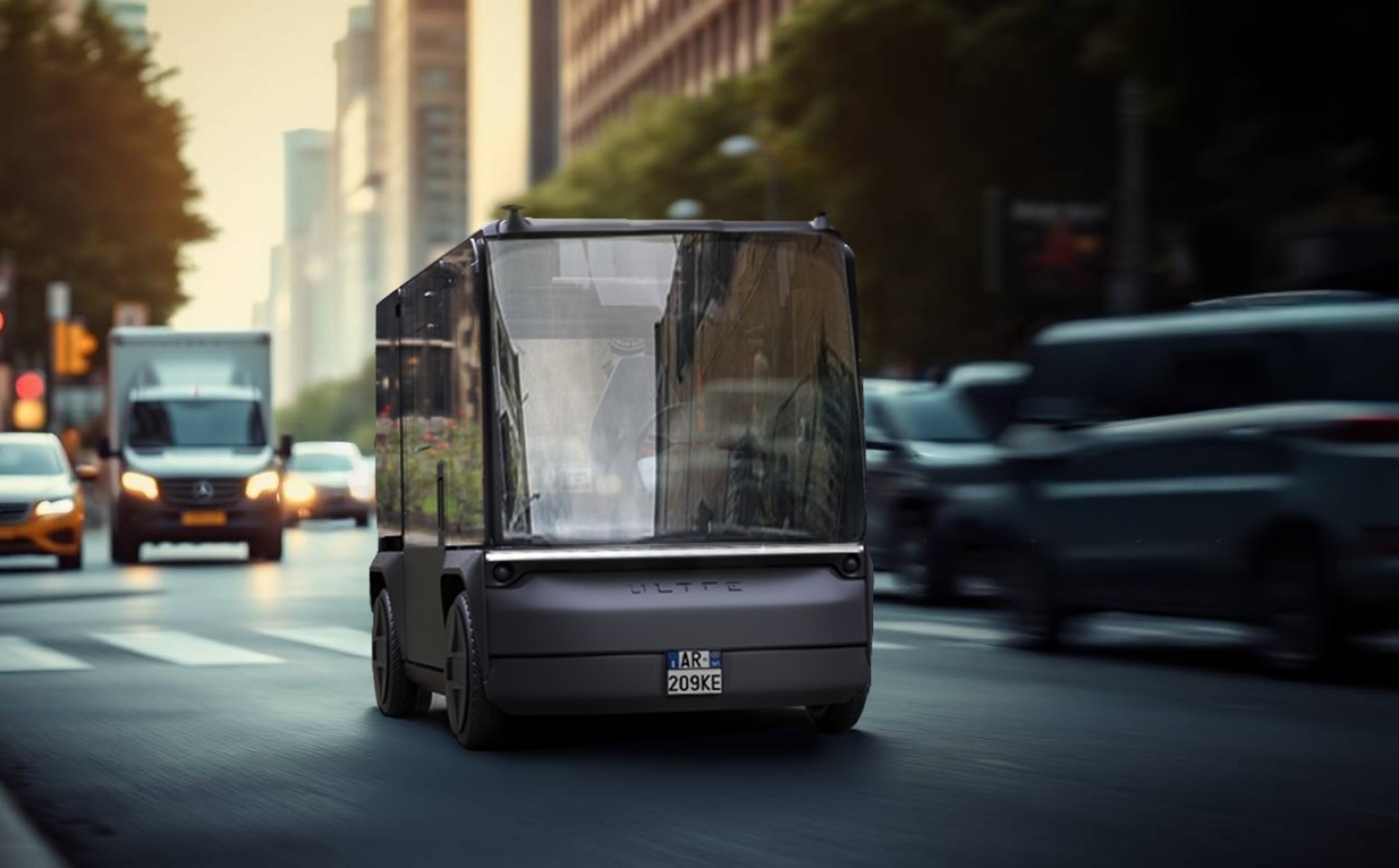
ultre vehicle

ULTRE™ – mobility of the future

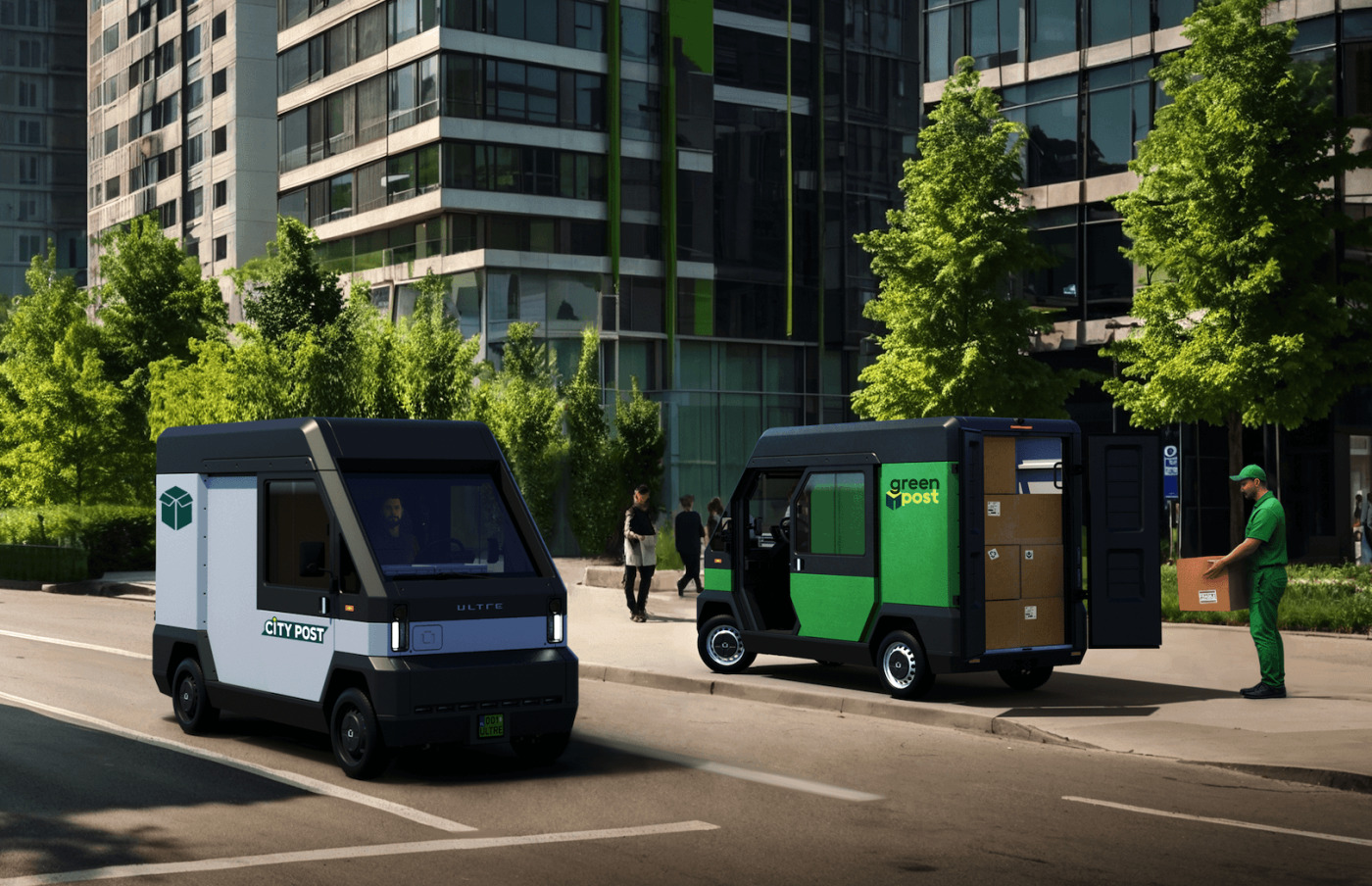
The furthest point reached so far along this trajectory is Ultre™. For the first time within an exhibition bringing design and art together, the vehicle will be presented in direct dialogue with Zięta’s artistic and design practice.

Ultre™ is the result of more than twenty years of research into ultralight structures. Principles initially developed for functional objects are here scaled up to the vehicle’s entire structural system. FiDU Frame™ — the vehicle’s ultralight frame — becomes the next stage in the same story: from a deformed metal stool to a structure for new mobility.
ultre vehicle

It is a transition from object to system, from an individual solution to an entire design infrastructure. Ultre™ demonstrates that technology can be not only a means of producing form, but also a tool for designing new models of mobility.
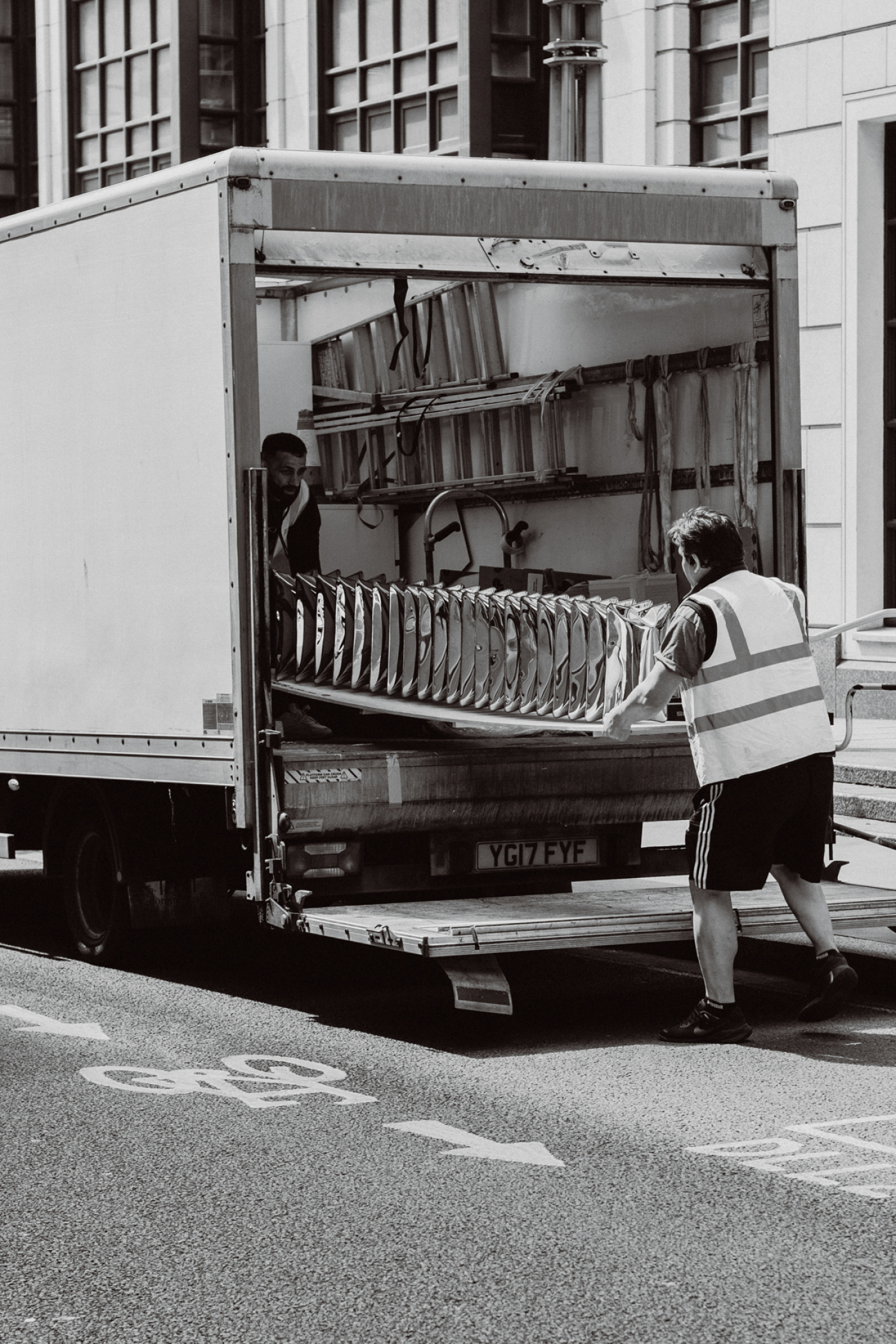
oskar zieta's whisper bench transportation

Whispers Bench photo: Alka Murat

Process instead of result
The axis of the exhibition leads from material, through process and technology, to expansion. From experiment to system. From object to architecture, from architecture to structure, from structure to mobility.

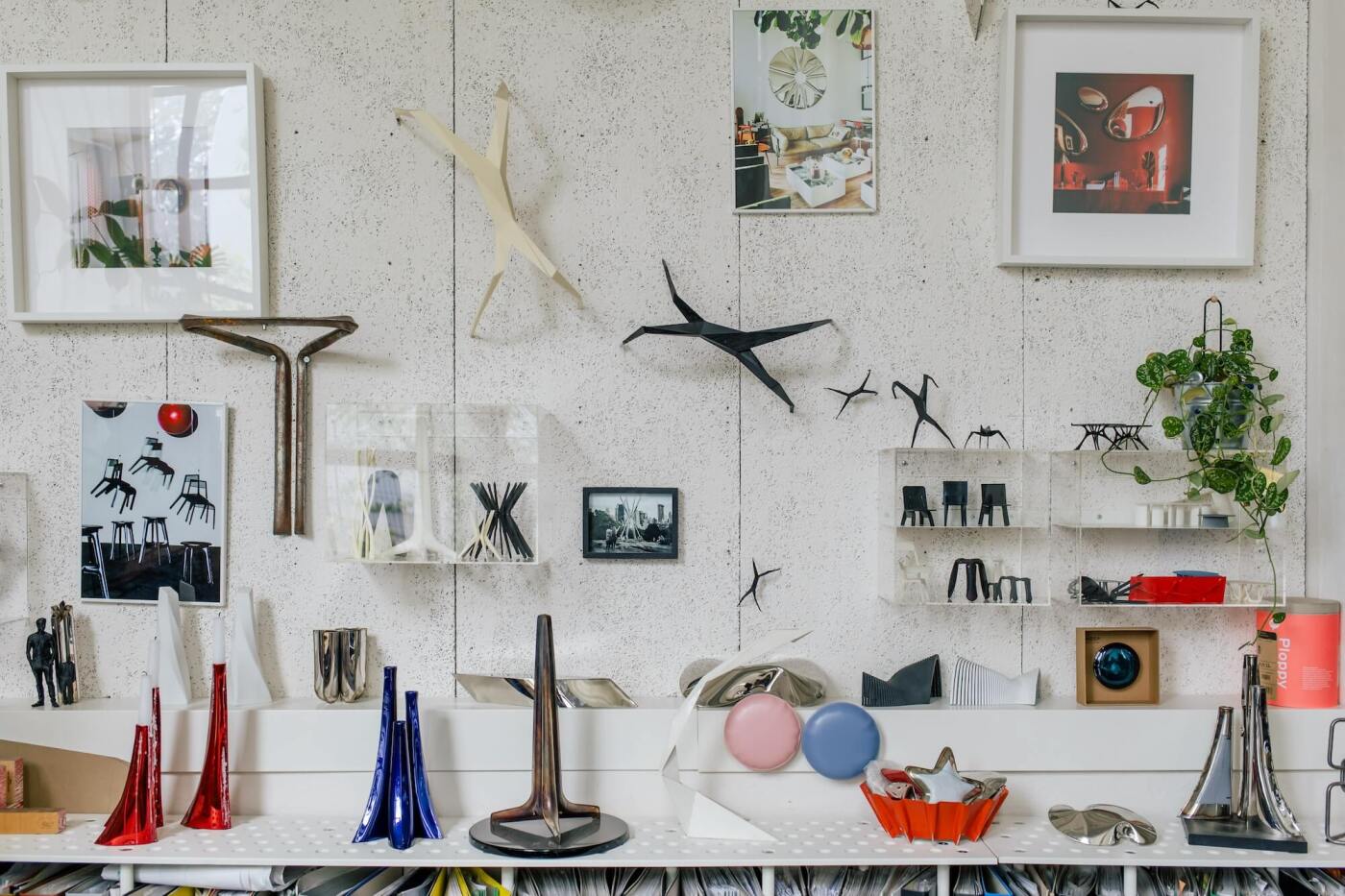
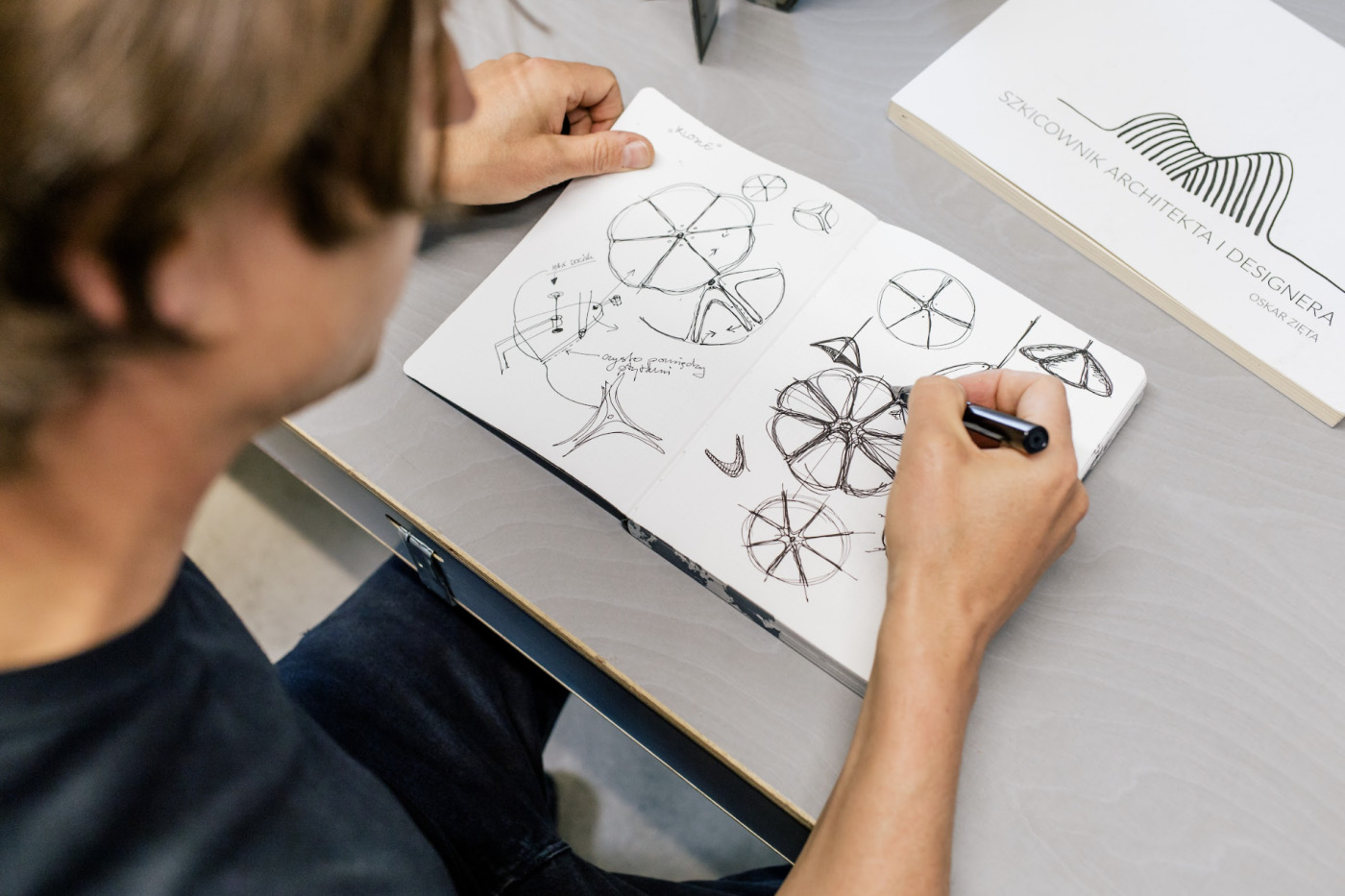
“Oskar Zięta. Process” reveals the background to the creation of his works: prototypes, models, sketches, profiles, sections, tests and documentation. It presents FiDU technology not as a closed solution, but as a living process — continually subjected to experimentation, scaled up and confronted with new challenges.
oskar zieta sketching his ideas

zieta studio production process

zieta studio prototypes

photo: Agata Maziarz

Each project grows out of the one before it, sometimes immediately, sometimes only years later. What connects them all is a fascination with material and a consistent pursuit of tailor-made constructions from metal.

The exhibition at the Institute of Industrial Design takes place during Warsaw Home and Warsaw Design Week, creating a meeting point for the design, architecture, technology and business communities. It is a summary of more than two decades of FiDU’s development, but above all, a look at what happens when a consistently developed idea moves beyond the boundaries of a single discipline.
Don’t miss out on upcoming events

Welcome to Zieta.
Select your preferences to tailor your experience.
You can change them in the menu at any time.
Confirm