Cart (0)
Back to Blog

The Harmonica Concept - volumetric growth as a design principle

Zieta Studio news

Echoes of Whispers photo: Alka Murat

Volume growth in contemporary design

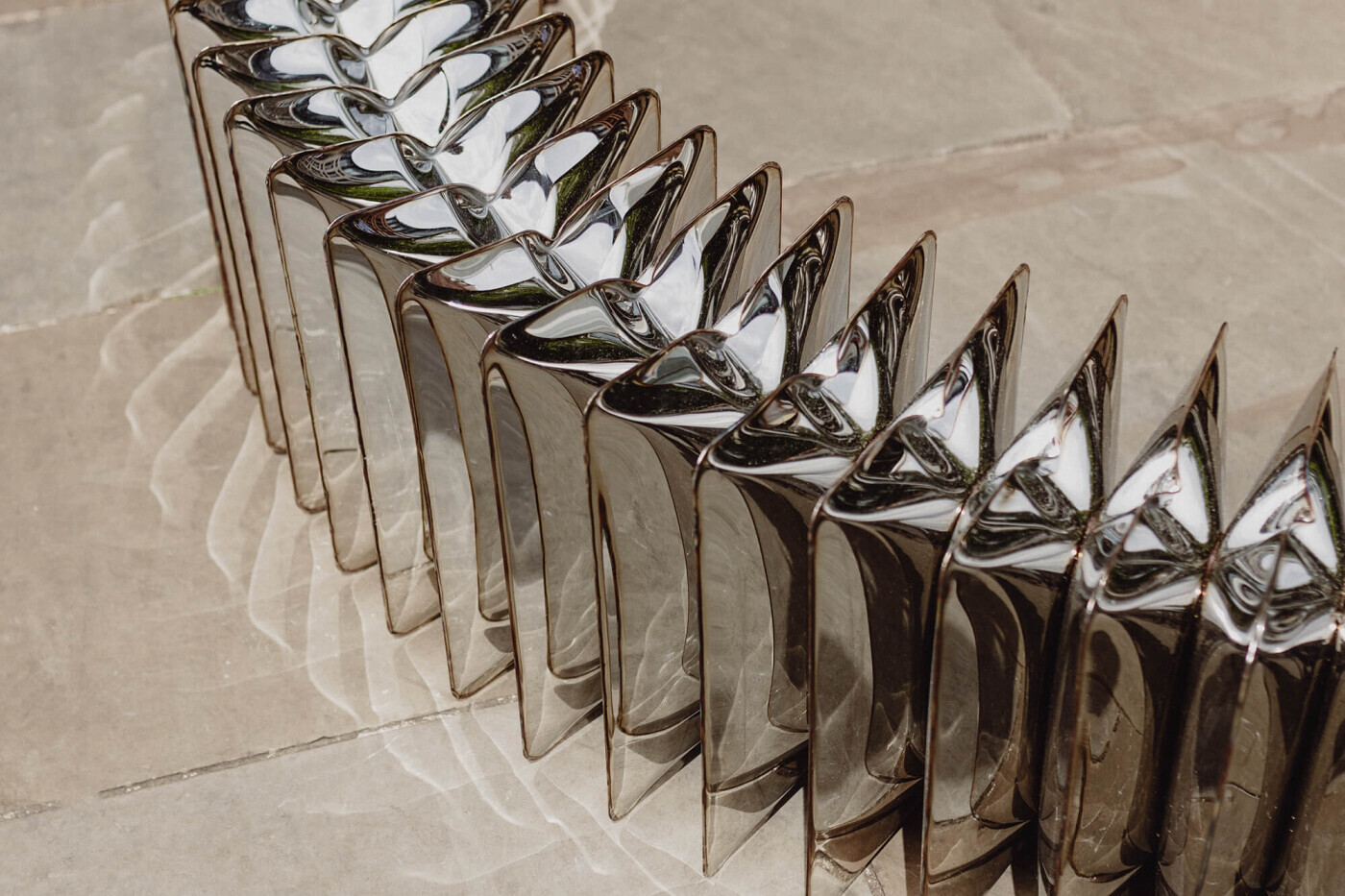
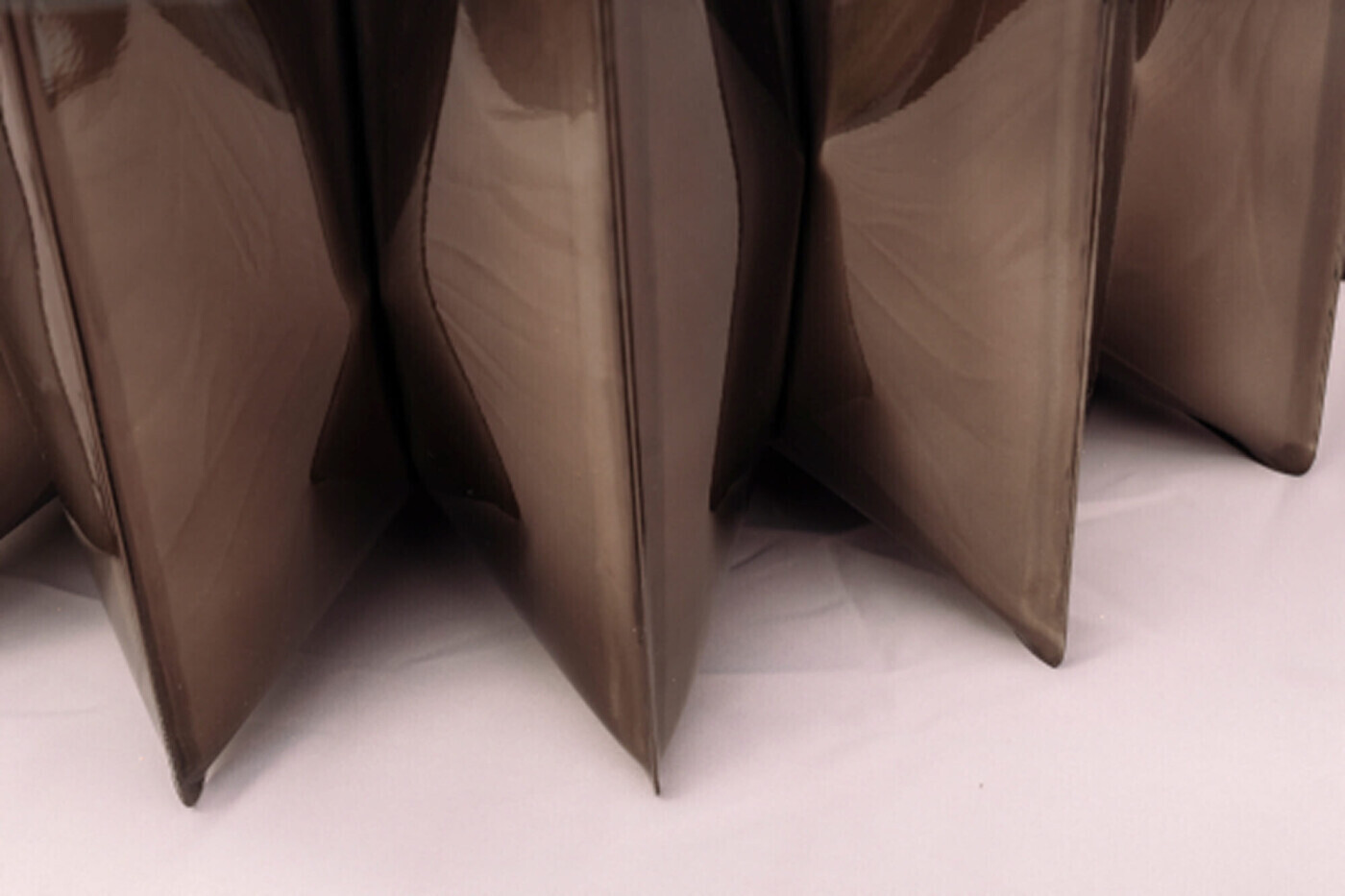
During FiDU deformation, two flat steel sheets are precisely welded along a designed contour. Air is then injected between them under high pressure. The steel yields, stretches and grows—transforming from a two-dimensional outline into a three-dimensional body. What emerges is not imposed from the outside, but generated from within. Volume is not added; it is born. This internal expansion forms the foundation of the Harmonica concept. 

When metal grows through design and technology
The Harmonica concept is an exploration of volume growth in contemporary design—a phenomenon in which metal does not merely take shape, but expands, unfolds and acquires spatial presence. It is rooted in the FiDU technology (Freie Innendruck Umformung), a process defined by what Oskar Zięta describes as a controlled loss of control. 

Echoes of Whispers photo: Alka Murat

Whispers photo: Alka Murat

Sculptural furniture and objects shaped by air
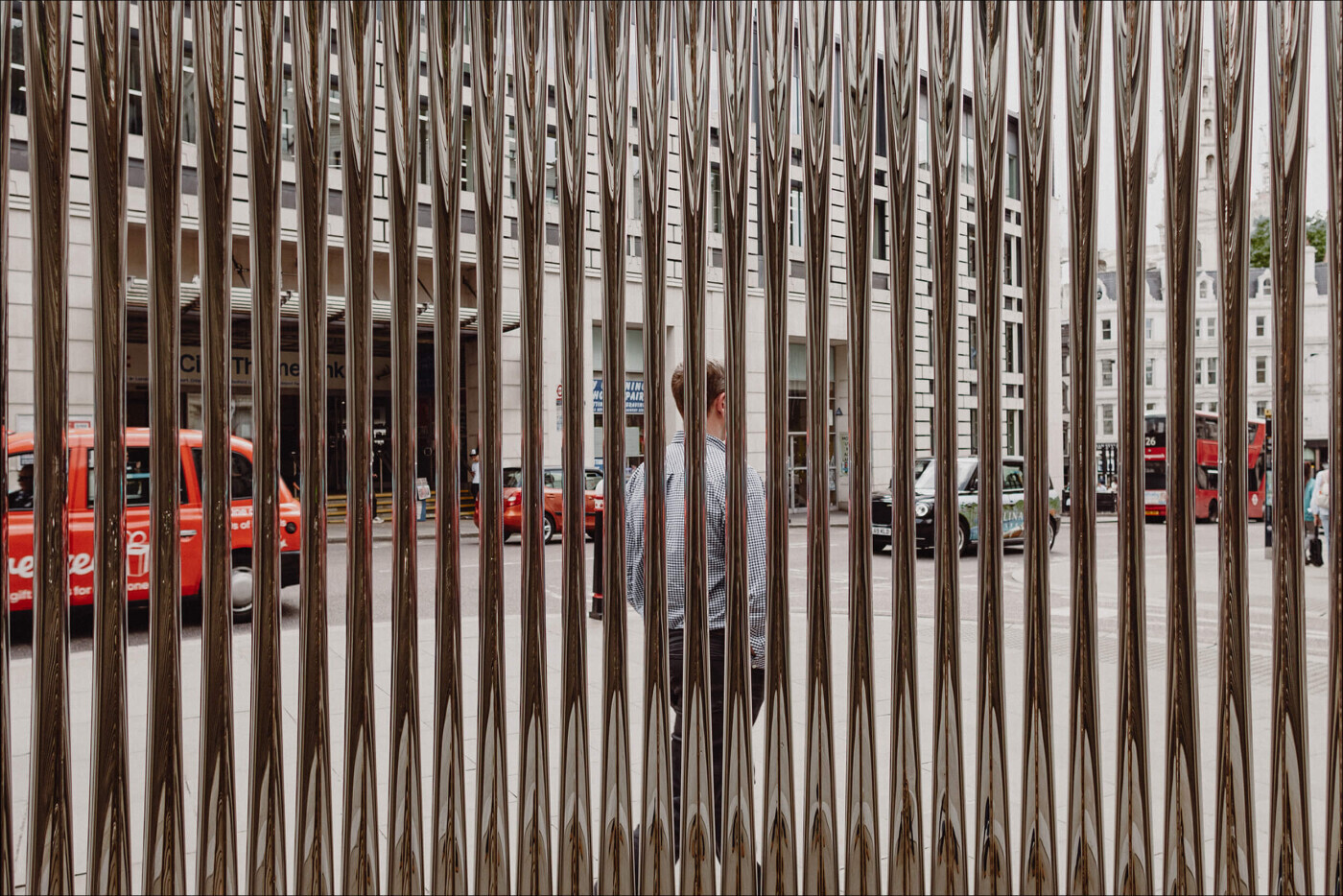
Whispers photo: Alka Murat

Rhythm and repetition in metal deformation
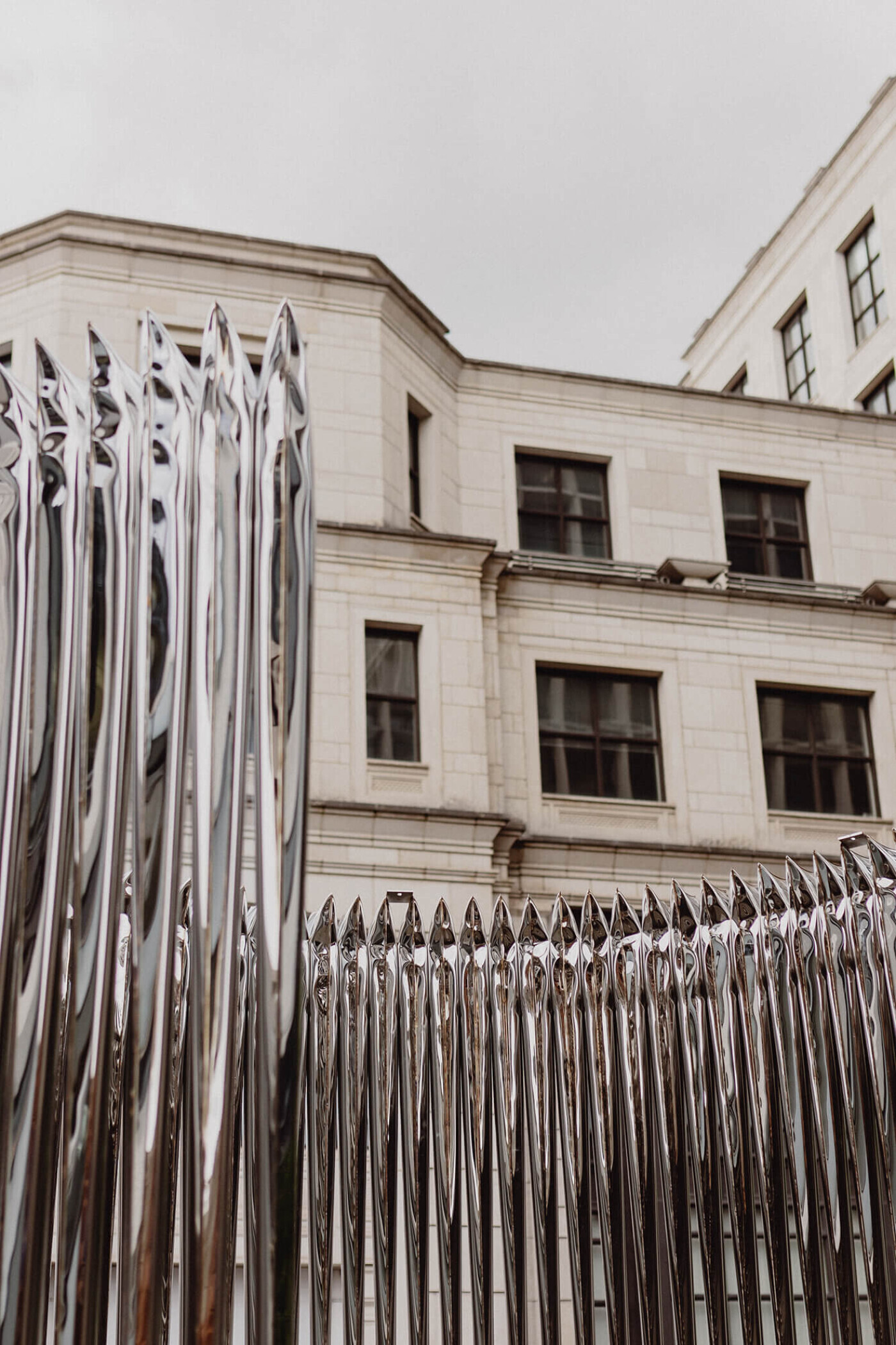
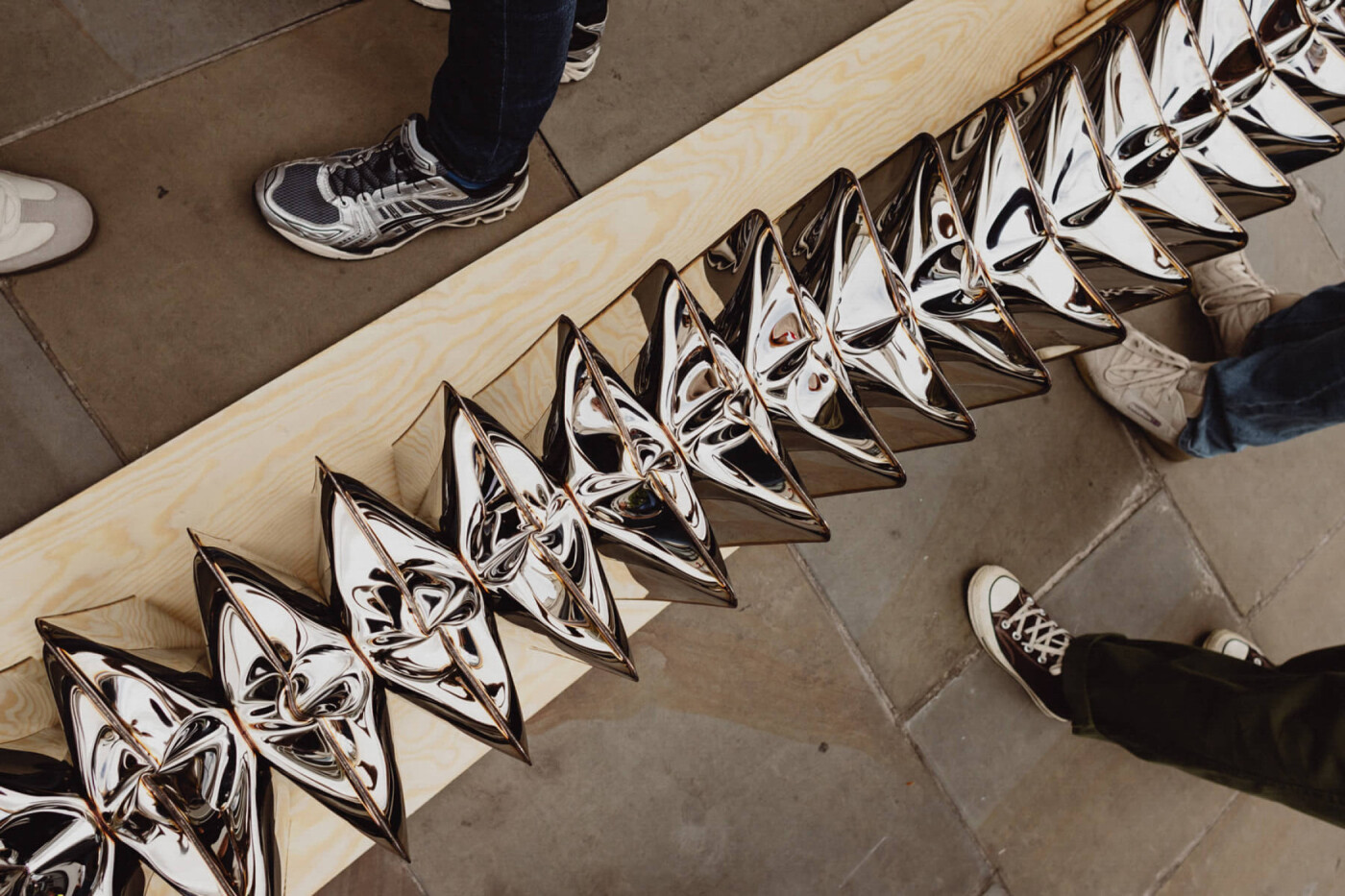
In the Harmonica objects, deformation is multiplied and sequenced. Steel expands rhythmically, segment by segment, like bellows or accordion folds. The result is a brutalist yet organic body—structured, repetitive, and alive with variation. 

Whispers photo: Alka Murat

“Air squared” as a structural agency

Zięta refers to this phenomenon as “air squared”—air that gains agency, weight and identity. Through FiDU, air defines stability, proportion and character. Each Harmonica object is a spatial record of pressure, timing and resistance. Each one documents its own making. 

Function becomes volumetric

This rhythmic growth evolved into a new design language in which function itself becomes volumetric. Tables, lamps and sculptural objects no longer rely on added structure or applied thickness. Instead, air becomes the primary structural tool. 

Echoes of Whispers photo: Alka Murat

Harmonica photo: Kacper Miodek

One process, infinite outcomes

The same amount of material. The same internal pressure. A different point of inflation. This is where controlled unpredictability becomes tangible. A linear form may curve. A cuboid may become circular. A whisper may turn into an echo. 

Controlled unpredictability in metal design

A crucial aspect of the Harmonica concept lies in a deceptively simple variable: the position of the air inlet. In FiDU, the location of the valve—the point where air enters the welded steel membranes—determines how the material expands. A shift of just a few centimetres changes the direction of force, the rhythm of deformation and the final geometry of the object. 

Echoes of Whispers photo: Szymon Jędrzejewski

HARMONICA TABLE photo: Szymon Jędrzejewski

Collectible design objects born from one process

Harmonica Table as structural manifesto
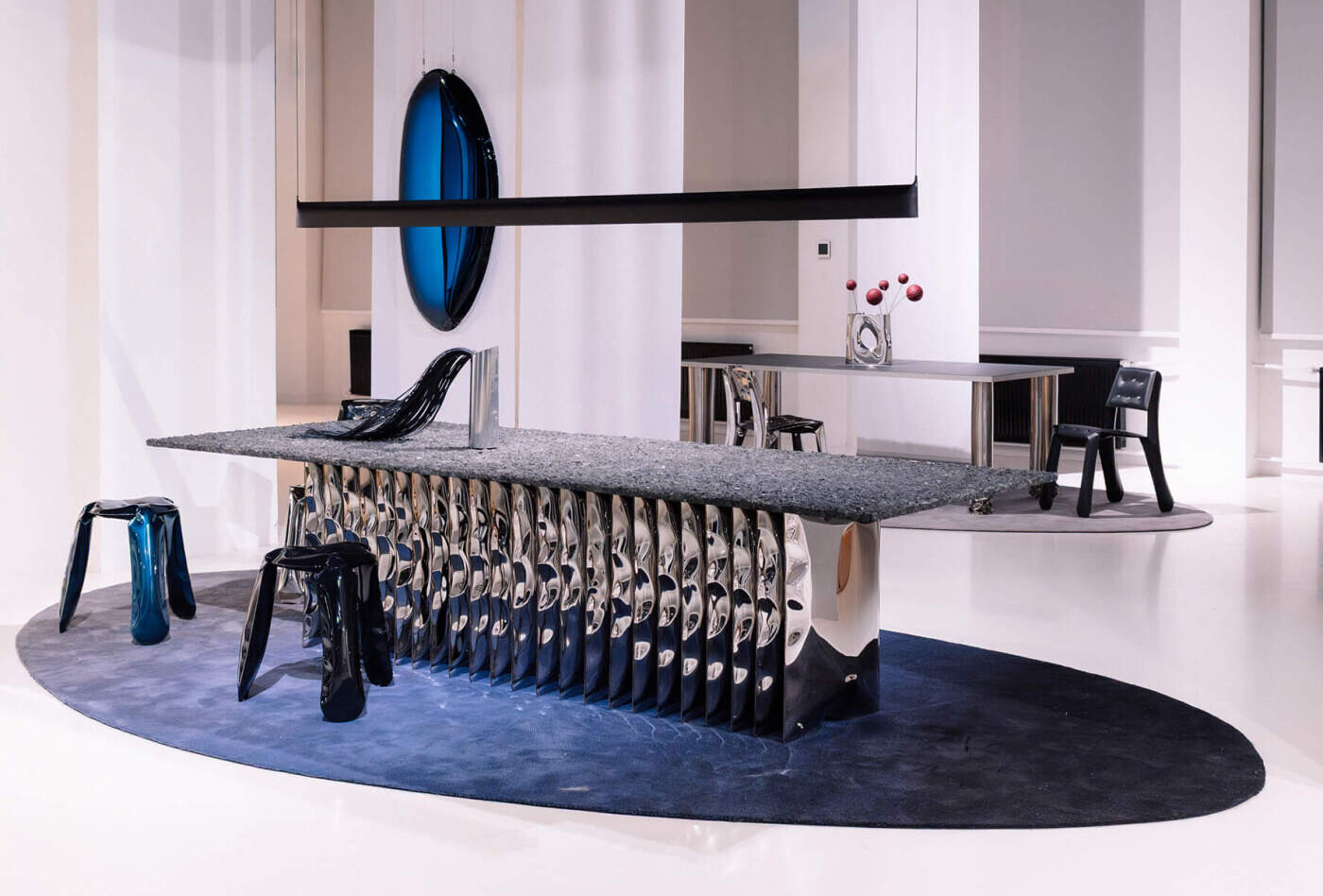
The Harmonica Table belongs to a wider family of collectible design objects that all originate from the same technological and conceptual foundation. This sculptural piece embodies Oskar Zięta’s structural way of thinking and the essence of his design methodology. It emerges from a dialogue with material and its internal forces, balancing controlled and uncontrolled deformation through the FiDU process. 

HARMONICA TABLE photo: Jakub Musialski
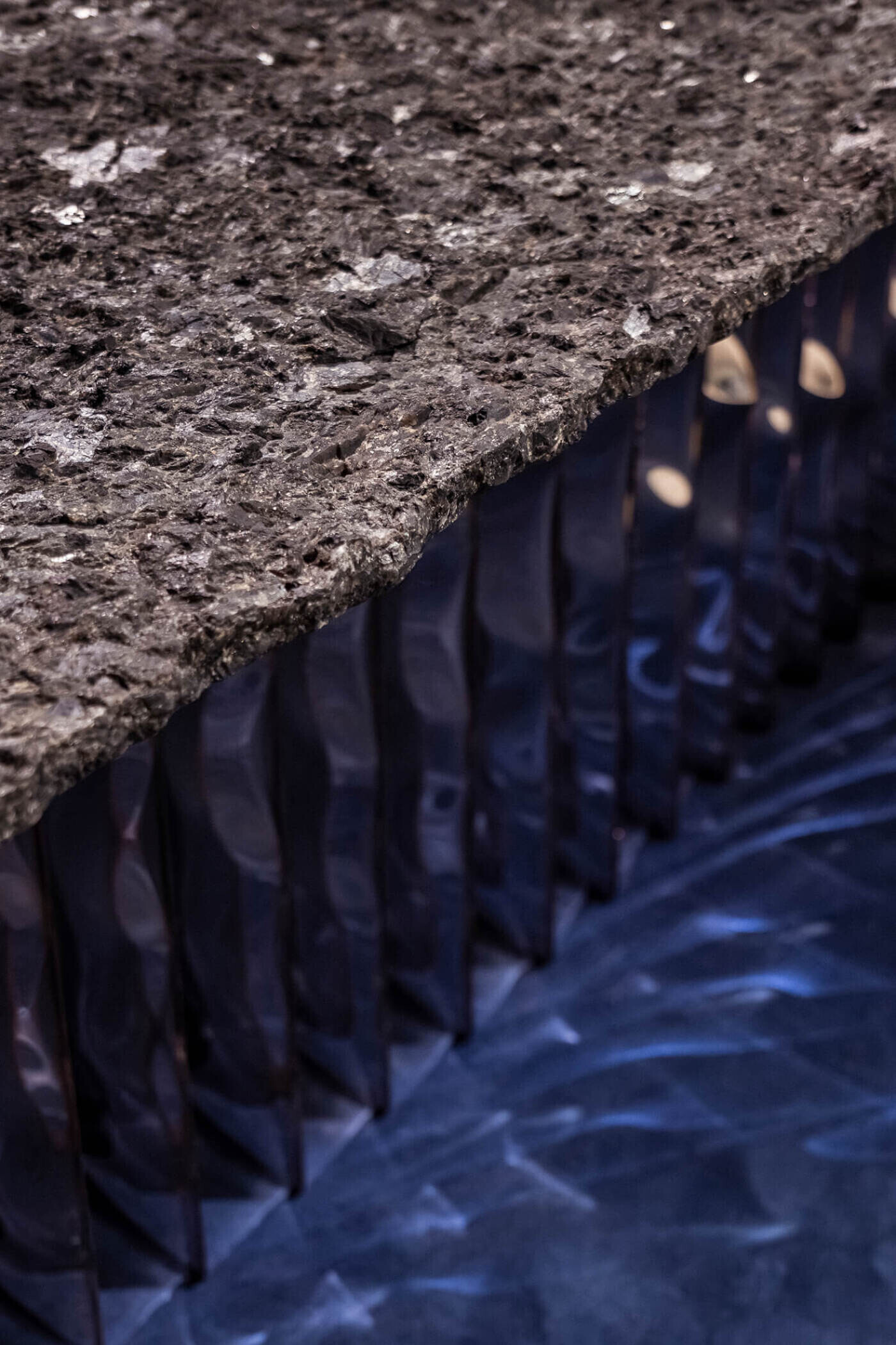
HARMONICA TABLE photo: Jakub Musialski

Steel and stone in sculptural tension
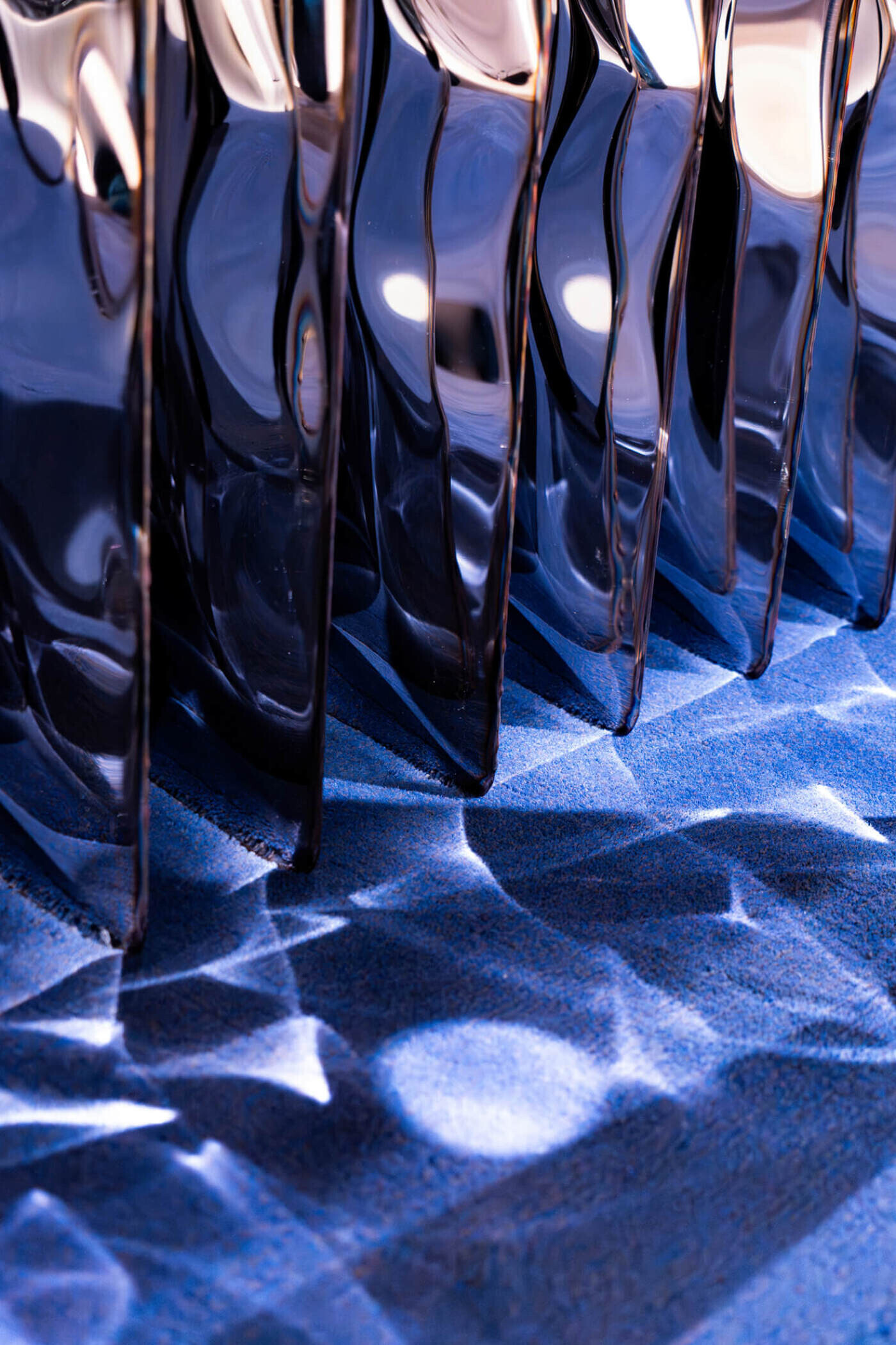
The table unites a brutalist steel base—grown from flat steel into a segmented, volumetric body by internal air pressure—with a granite top carved from a single, mineral-rich block of stone. This dramatic stone surface, cut using techniques reserved for monumental sculpture, reveals the raw geological interior of the material: fractures, grains, and tensions formed over millions of years. 

HARMONICA TABLE photo: Jakub Musialski
Harmonica photo: Jakub Musialski

Harmonica Lighting - architectural lamps shaped by volumetric growth

Harmonica photo: Kacper Miodek

Light recorded in steel layers

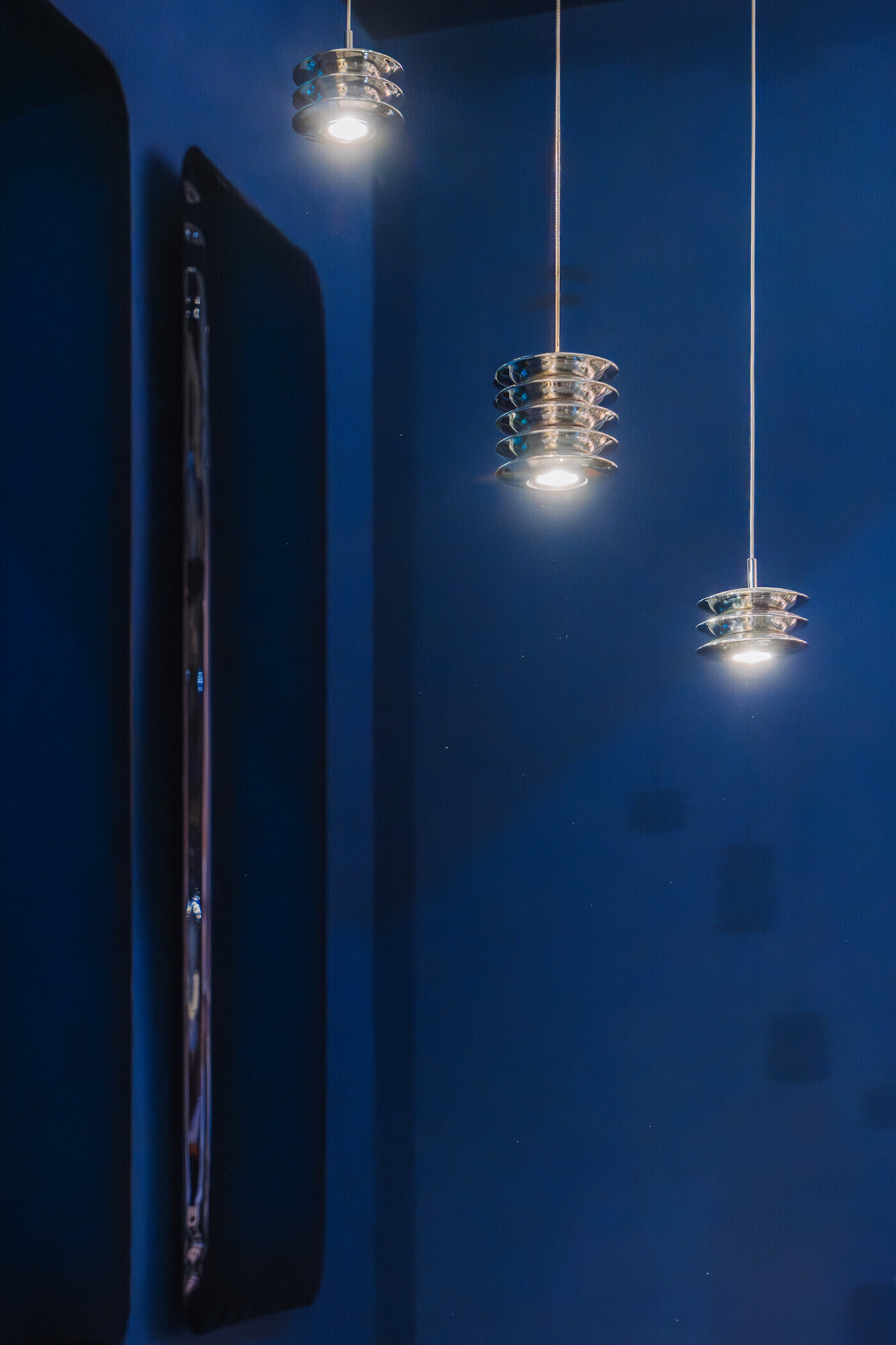
In the Harmonica Lamp, volumetric growth becomes a medium for light. The lamp’s body is composed of multiplied steel segments—Harmonica “layers”—that expand sequentially through the FiDU process. Each layer records a moment of internal pressure, creating a rhythmic, architectural structure that filters and diffuses illumination. 

Harmonica photo: Kacper Miodek

Harmonica photo: Jakub Musialski

Harmonica Floor as an architectural accent

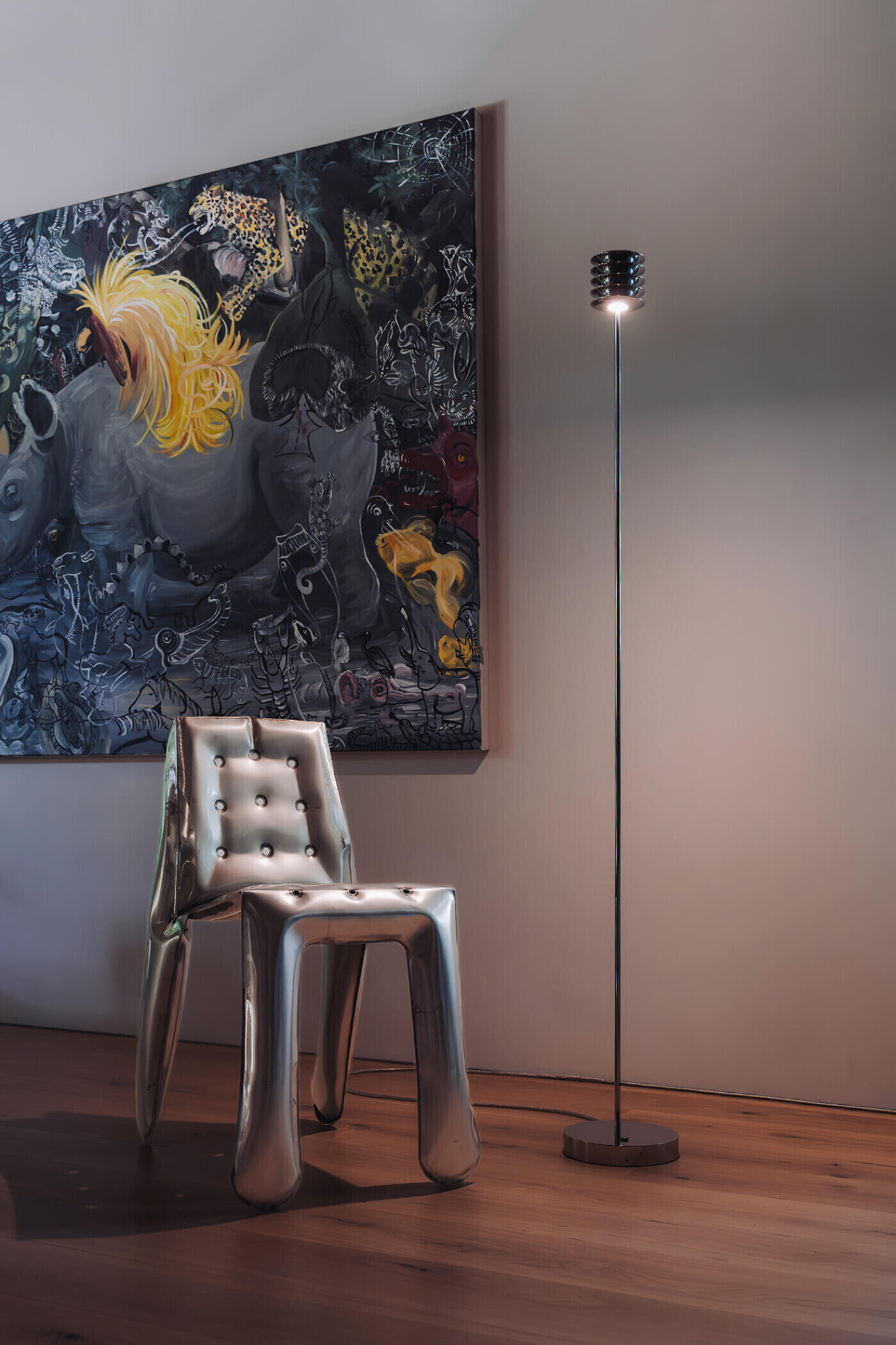
The Harmonica Floor lamp translates the same principle into a vertical, freestanding object. Here, light is distributed both functionally and ambiently, while the sculptural steel body maintains a strong architectural presence. Whether suspended or standing, Harmonica Lighting demonstrates how volume, rhythm and illumination merge into a single coherent form. 

Pendant configurations and spatial tuning
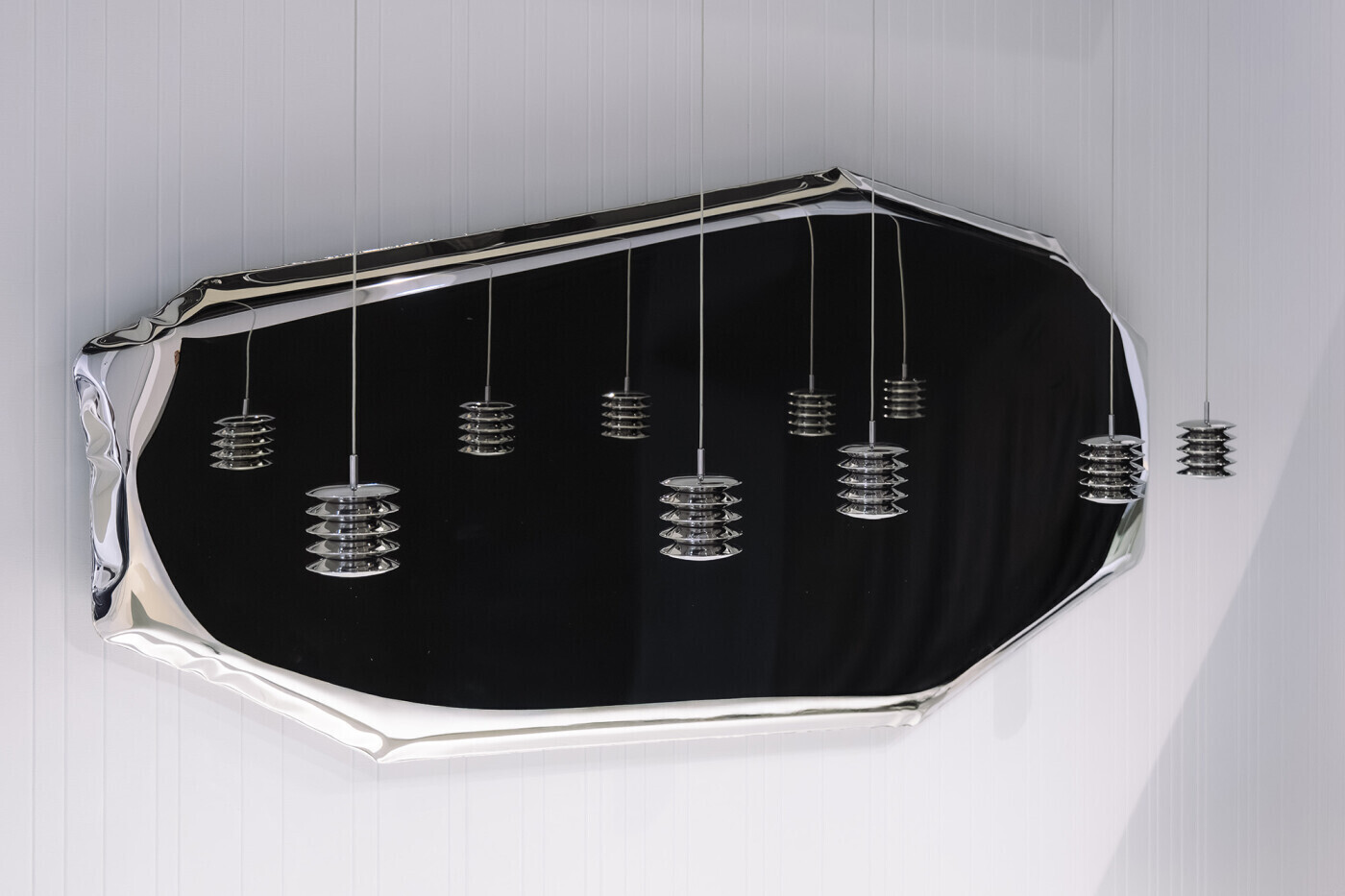
The pendant version of the Harmonica Lamp is available in configurations with three, five or seven Harmonica layers, allowing the scale and intensity of the object to be precisely tuned to the space. In both variants, light travels through a form shaped entirely by air, turning deformation into atmosphere and making the process itself perceptible. 

Harmonica Floor photo: Jakub Musialski
Whispers photo: James Harris

Whispers - public art, performance and the visibility of process
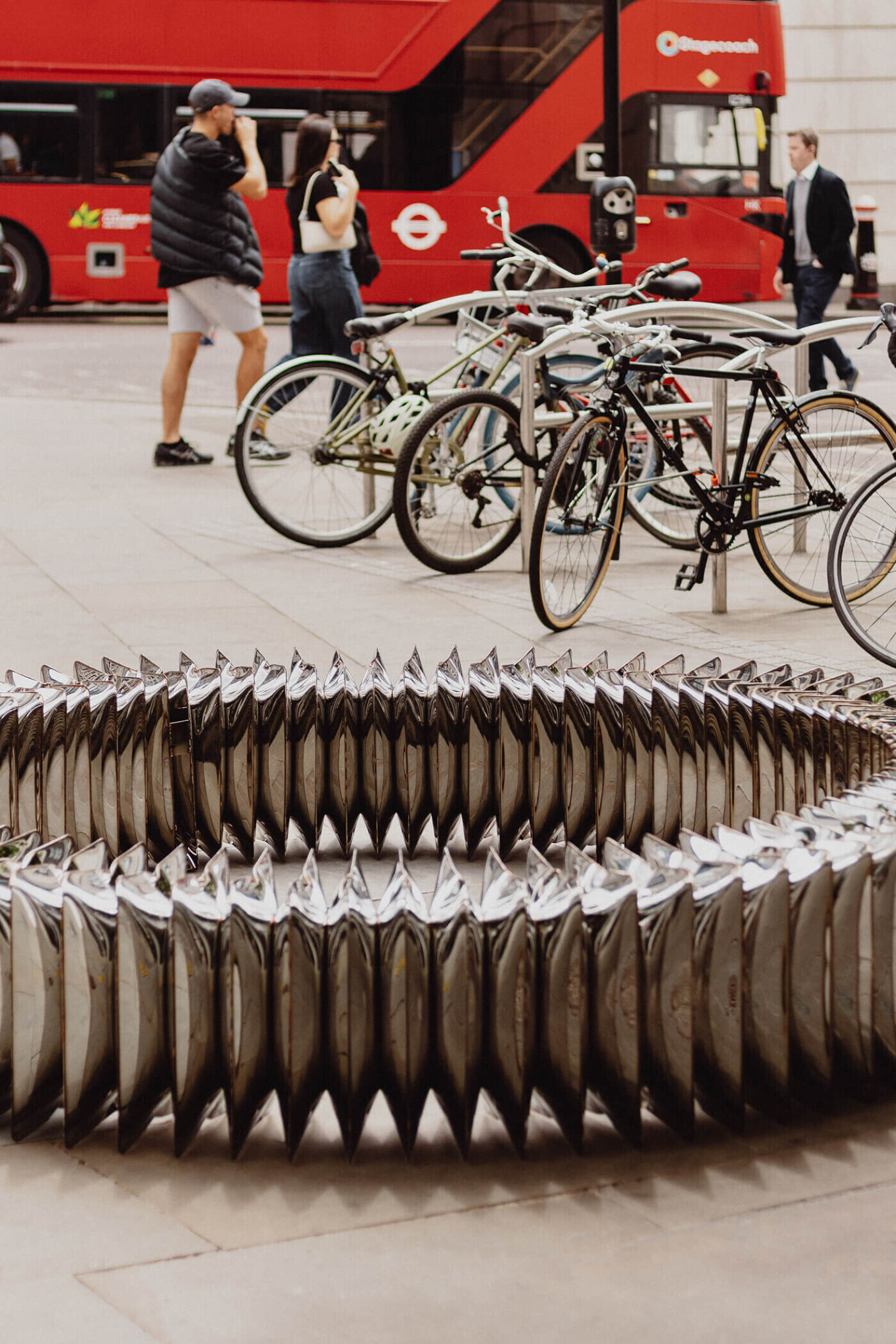
Whispers photo: Alka Murat

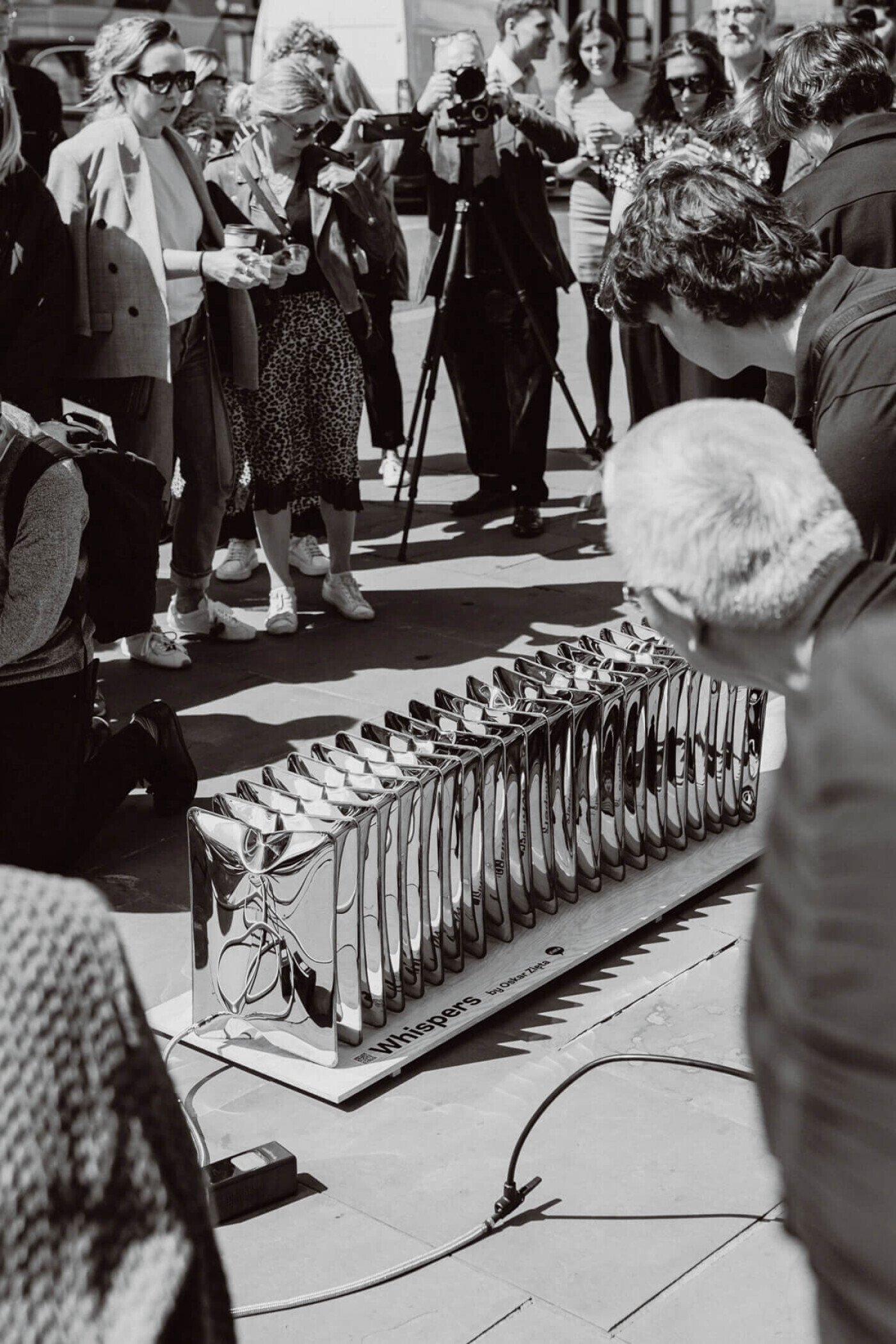
Live deformation in urban space
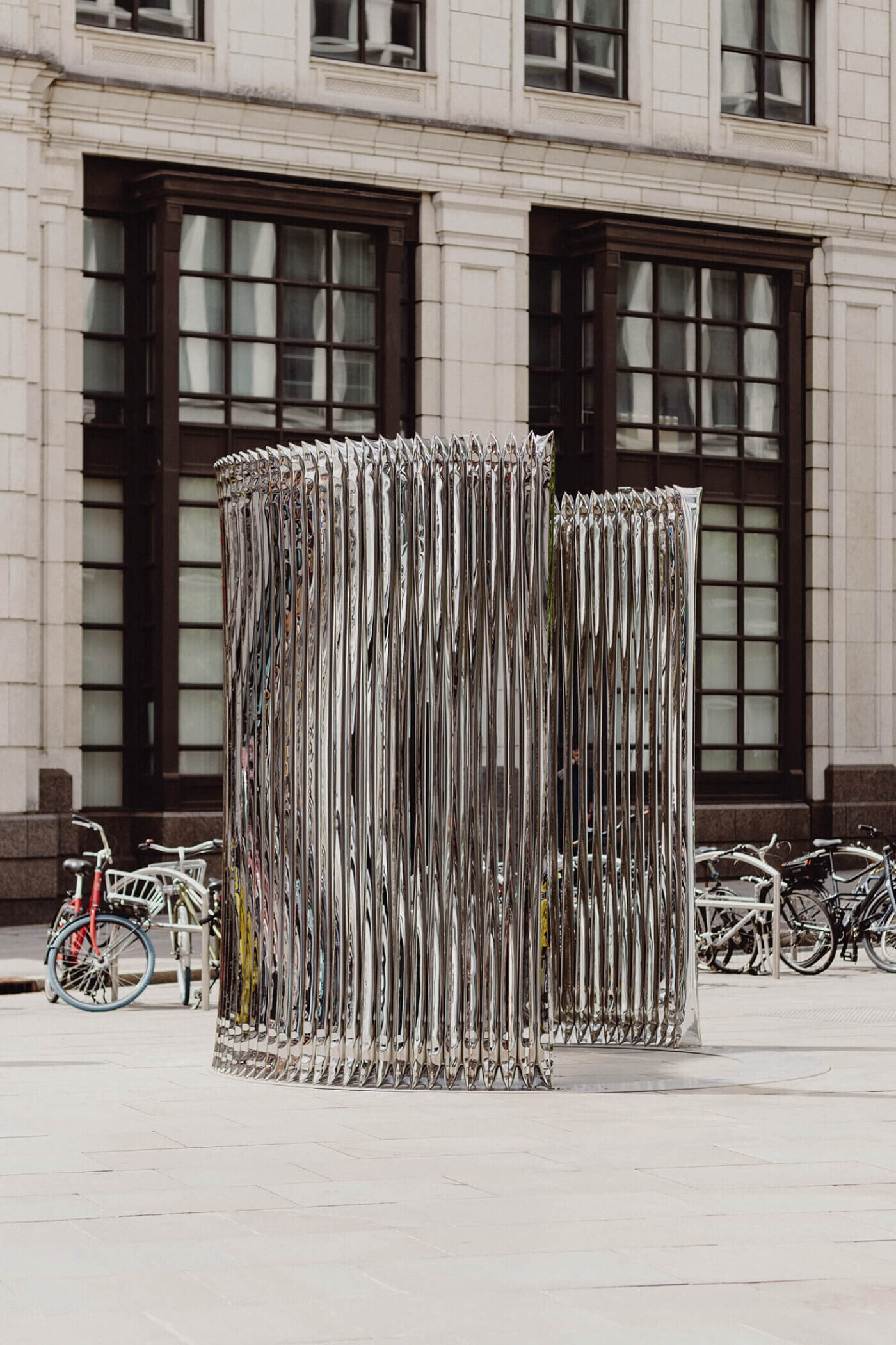
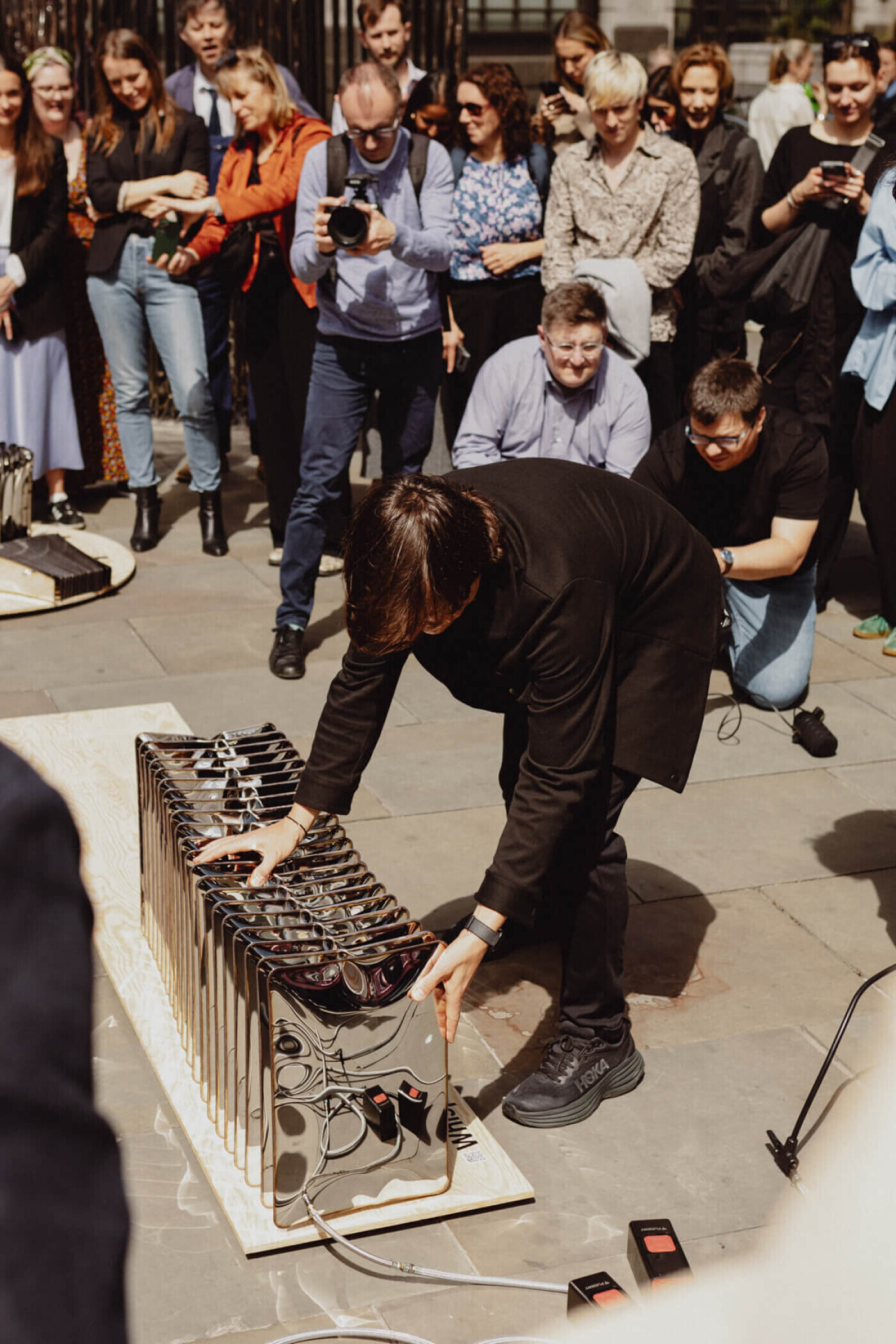
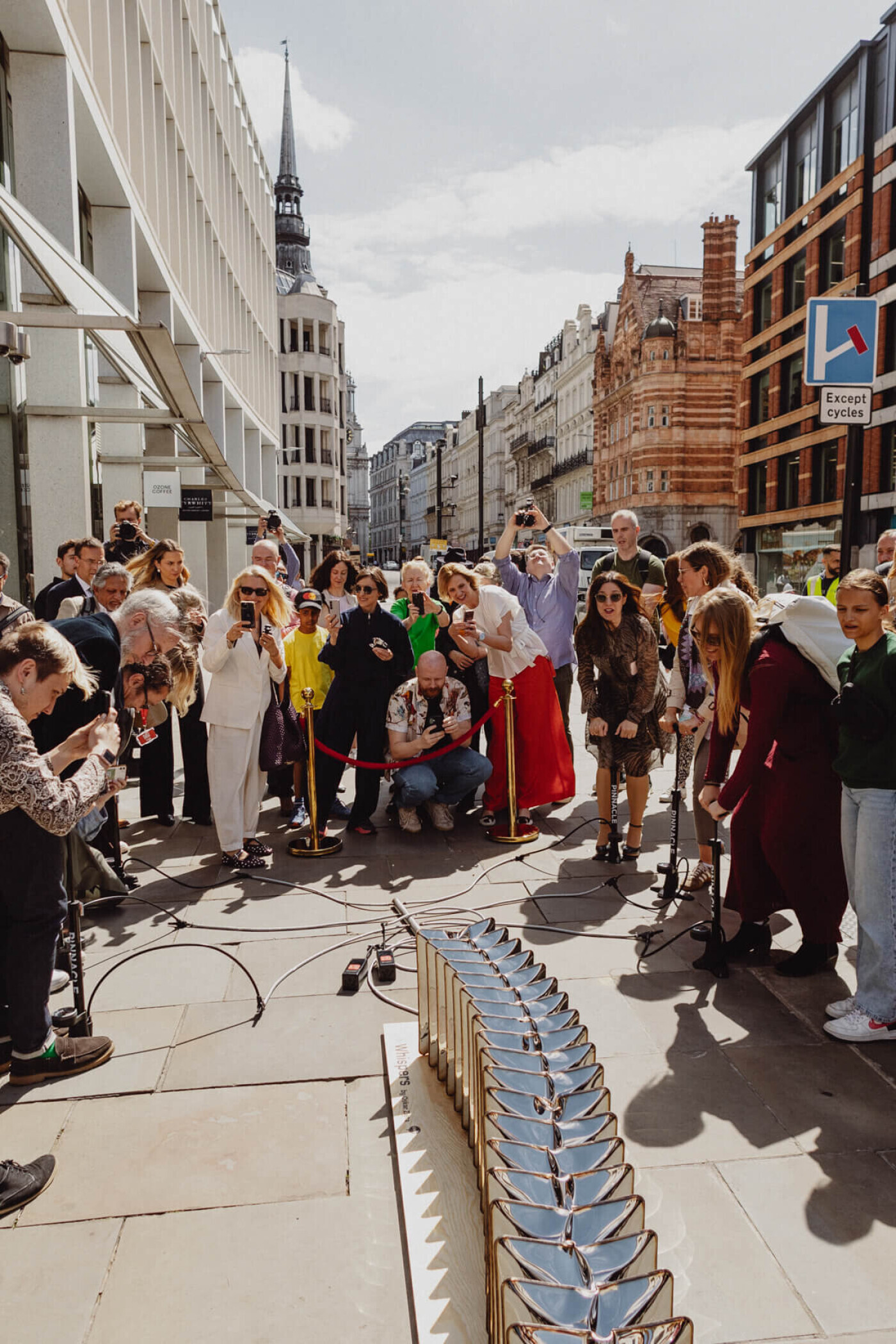
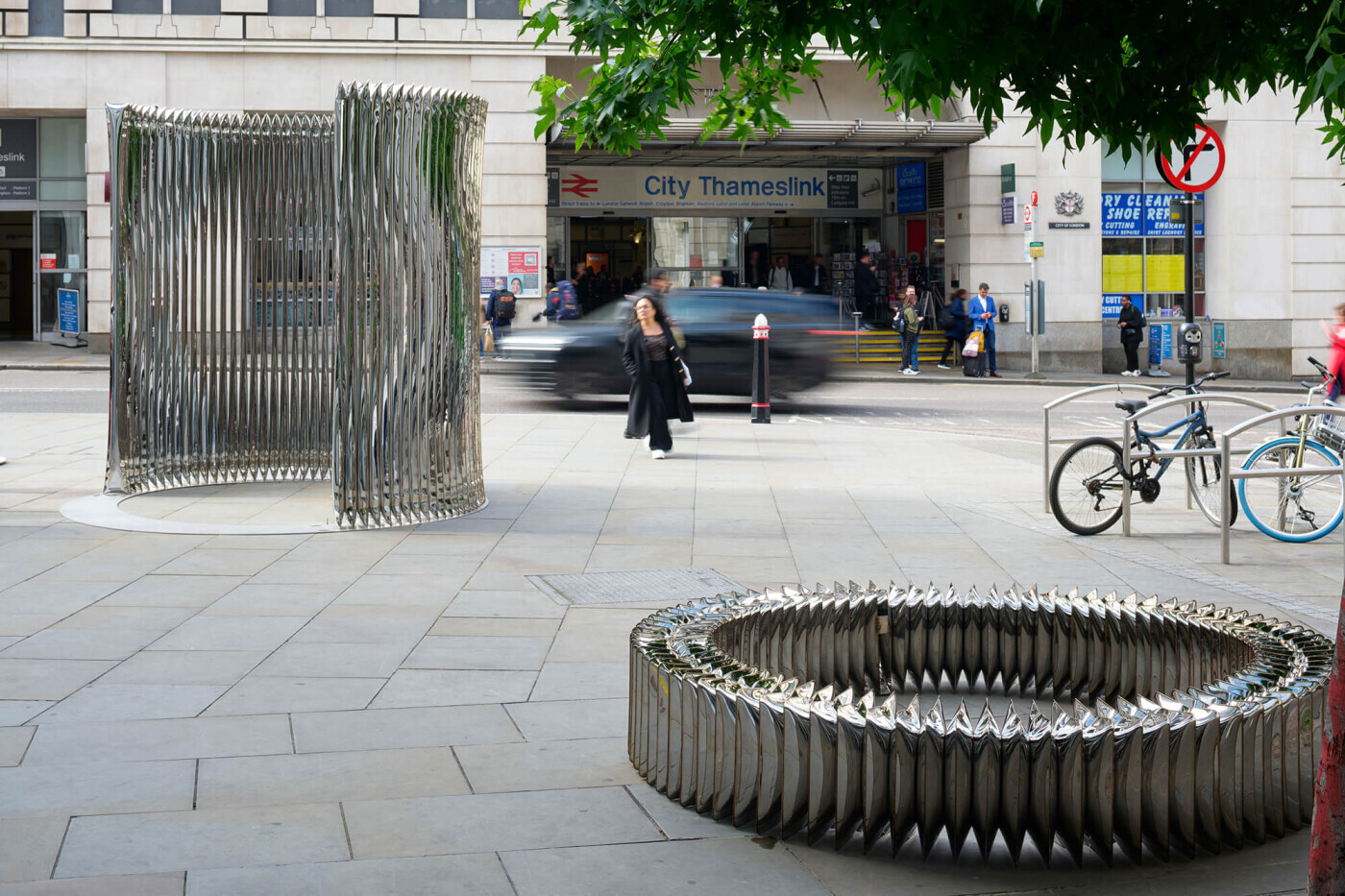
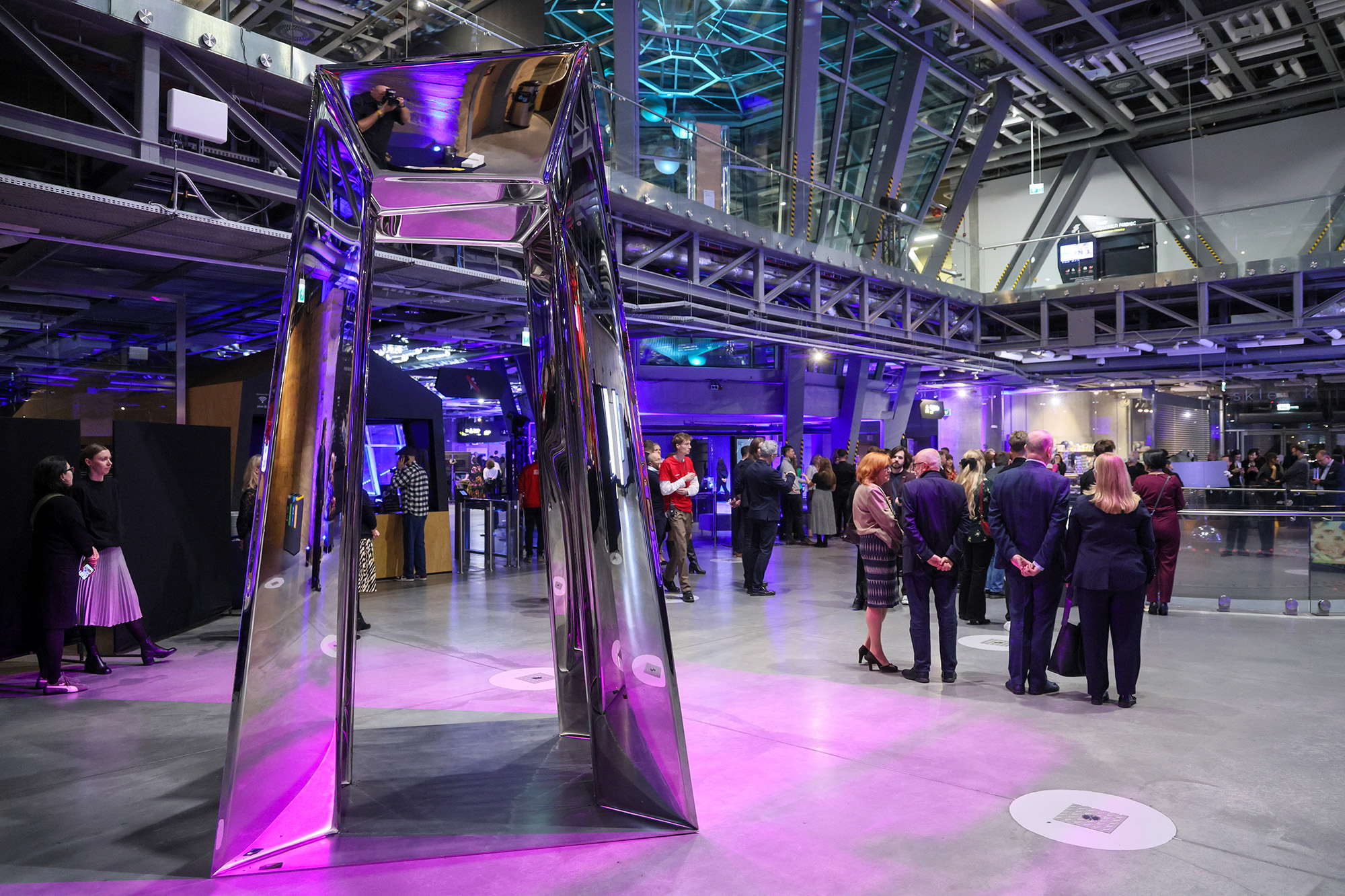
The Whispers sculpture marked a pivotal moment in the Harmonica narrative. First realised as a public bench-sculpture on Ludgate Hill during the London Architecture Festival 2025, Whispers was accompanied by a large-scale installation and presented as a live, performative act of deformation. 

Whispers photo: Alka Murat

Whispers photo: Piet Albert Goethals

From public bench to curated collectible

In 2026, the same Whispers bench entered an international exhibition context during Maison&Objet Paris, where it is presented as part of CURATIO—the curated selection by Thomas Haarmann in the Signature sector under the patronage of AD France. Positioned among collectible design works, Whispers shifts from urban infrastructure to gallery object. 

Whispers photo: Piet Albert Goethals

Echoes of Whispers photo: Alka Murat

Echoes - variations of one form, one material, one pressure
Echoes of Whispers photo: Alka Murat

Echo one — linear deformation narrative
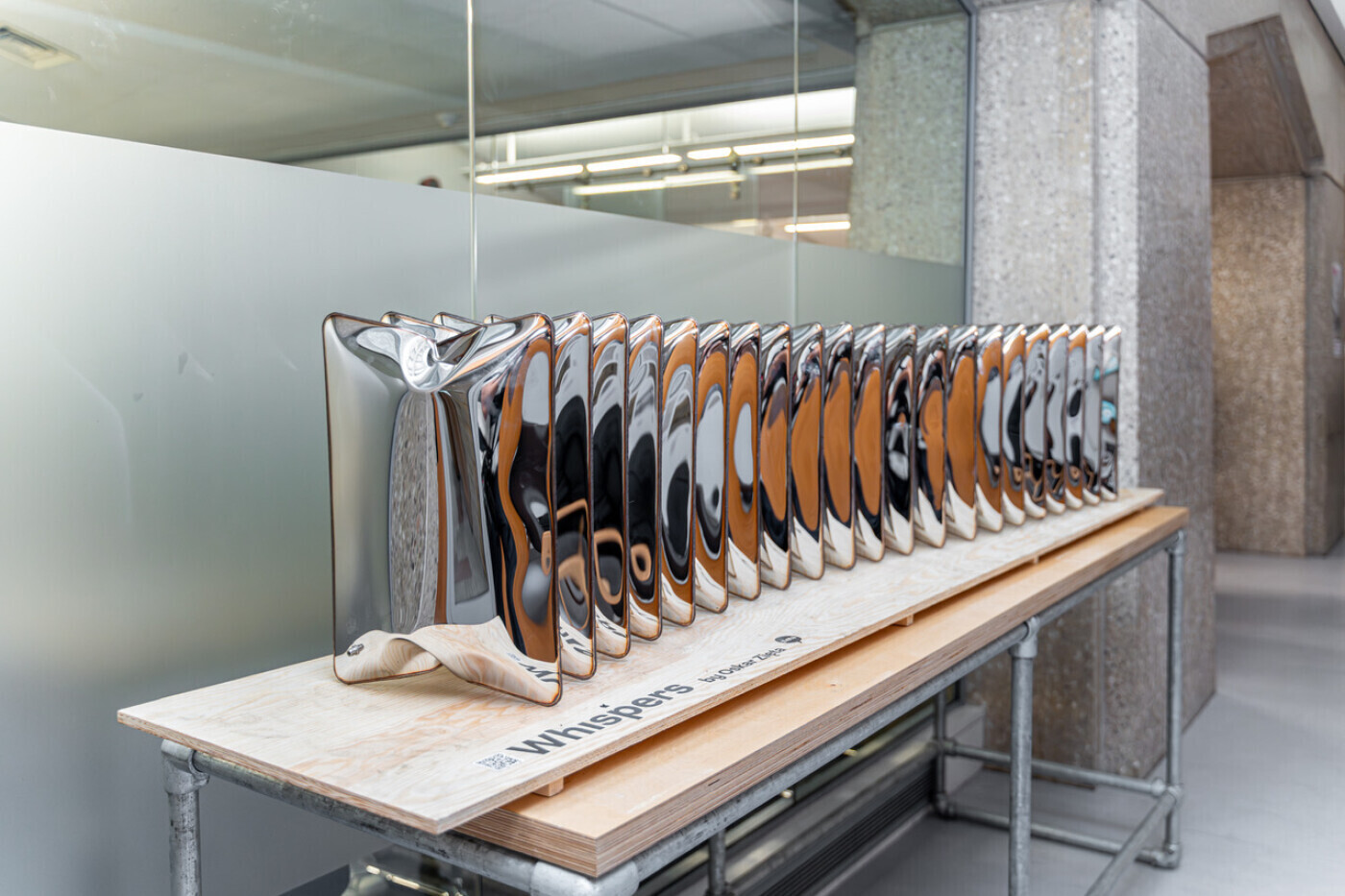
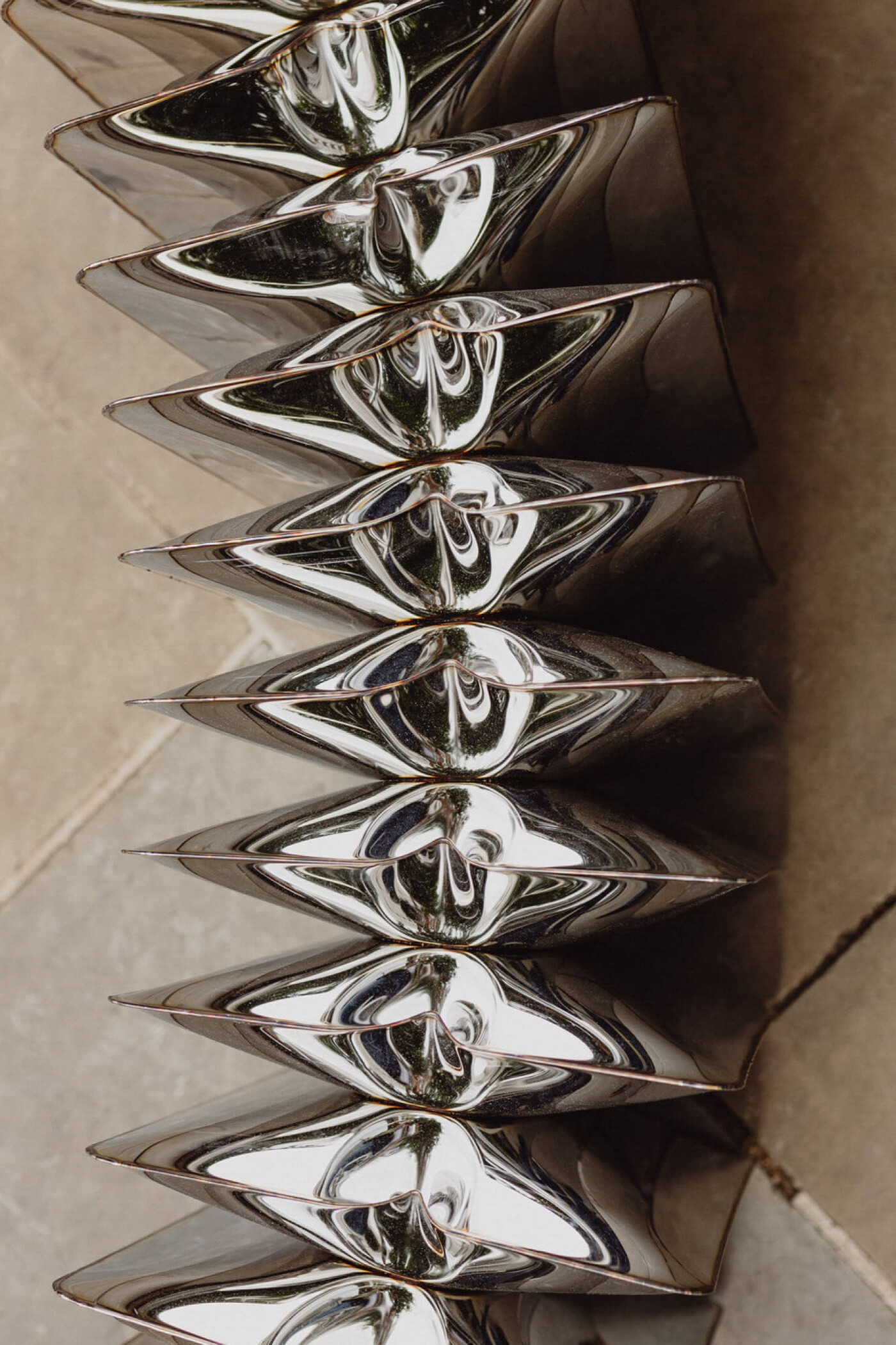
The Echoes articulate two parallel narratives born from the same process, material and pressure, yet diverging through a single decisive variable: the position of the valve. Echo one unfolds as a linear narrative—a material reflection of the Whispers bench, formed from the same steel, with the same internal pressure, but redirected by a different point of inflation. This subtle shift transforms continuity into variation, revealing the tension between control and unpredictability that defines FiDU. 

Echoes of Whispers photo: Alka Murat

Echo two — axial form and reflective presence

Echo two,  by contrast, develops an axial narrative. The structural logic of Whispers is preserved, yet rotated into a circular, mirrored form that abandons horizontality in favour of vertical contemplation. Smaller in scale and jewel-like in presence, Echo two is not an invitation to sit, but to observe and reflect—on the process, on the expressive potential of steel, and on how deformation can move seamlessly between function, sculpture and art. 

Echoes of Whispers photo: Alka Murat

Echoes of Whispers photo: Jakub Musialski

Echo Table — functional volume growth
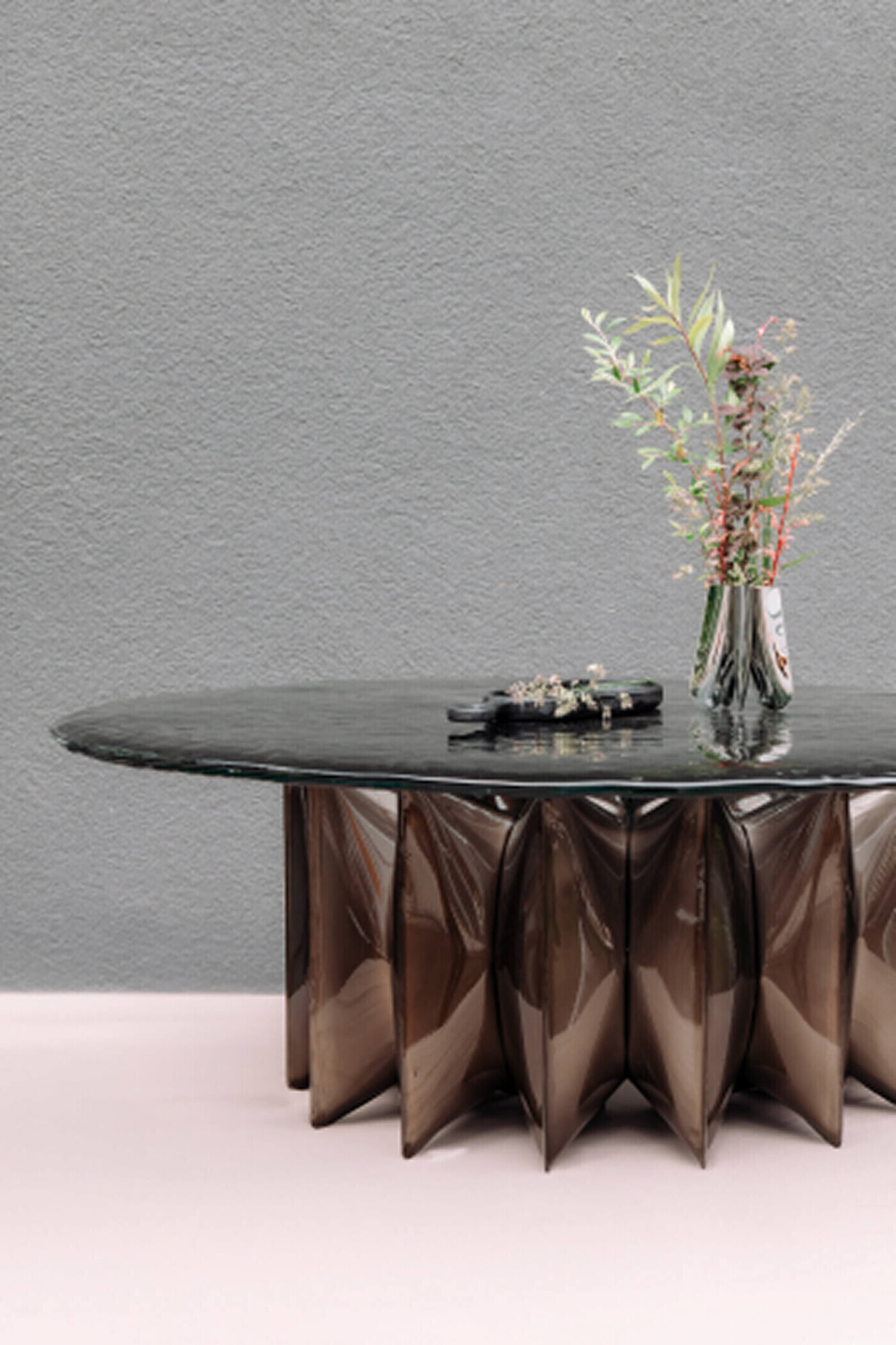
The Echo Table (also known as Echo three) translates this logic into a functional plane. It is an object in which deformation supports use, volumetric growth becomes structure, and process once again defines form. Echo three combined with a handcrafted glass top, it becomes a massive yet "lightweight" base for Zięta’s provocative table design. It juxtaposes polished steel with a transparent surface. 

Whispers photo: Alka Murat

To compose your own form or finish of Harmonica, Whisper, or Echo sound, contact us directly. 

A continuous experiment - design as an evolving system
Harmonica, Whispers, and the Echoes are not separate projects. They are chapters of one ongoing investigation into material behaviour, pressure and growth. The Harmonica concept is not a closed form. It is a system—one that continues to expand, deform and evolve, just like the metal itself. 

Echoes of Whispers photo: Alka Murat
Don’t miss out on upcoming events

Please select preferred language and currency to make ordering process easier for you.
It can be changed later in menu above
Confirm